



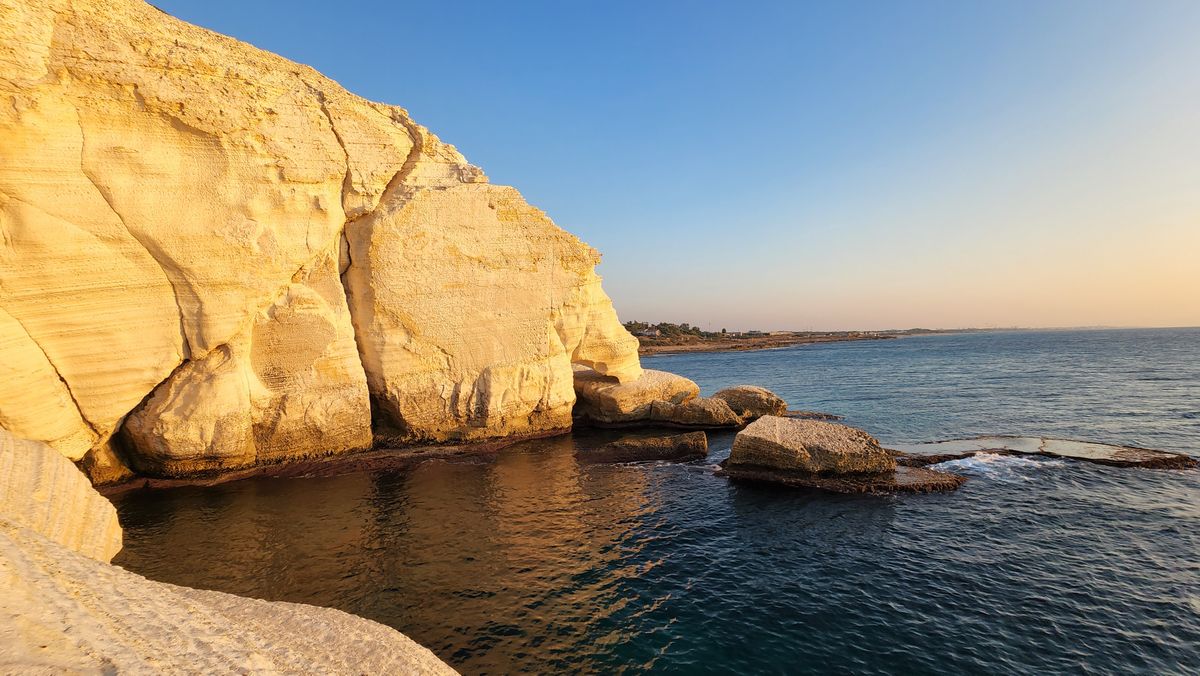
Israel ends at Rosh Hanikra Israel. Not with a whimper, not with a fence, but with white chalk cliffs plunging into the Mediterranean and the sea crashing through grottoes that took nature thousands of years to carve. It is one of the most dramatic landscapes in the country, and it sits right on the border with Lebanon, where the last stretch of Israeli coastline meets the first stretch of Lebanese coastline and the two countries face each other across a blue line drawn in the rock.
White Chalk Cliffs: How the Sea Carved the Rock
The white cliffs of Rosh Hanikra are made of chalk and soft limestone, the same coastal rock that forms much of the Mediterranean shoreline, but here it is at its most exposed. The cliff face is porous enough for the sea to work its way into every crack and weakness, slowly hollowing out the rock from within. Over thousands of years of wave action, the result is an extraordinary system of sea caves, tunnels, and chambers carved directly into the headland. The geological formation is part of a ridge that extends from the mountains of Lebanon into the sea, creating the natural barrier that has served as a chokepoint for travelers and armies since antiquity.
What makes the grottoes particularly striking is that they are still being formed. The sea has not finished its work. Every winter storm widens a passage, deepens a chamber, opens a new crack to light. The cliffs you see today are slightly different from the cliffs that existed a century ago, and they will be different again a century from now. Standing at Rosh Hanikra, you are watching geology in real time.
The Grottoes: Light, Water, and Color
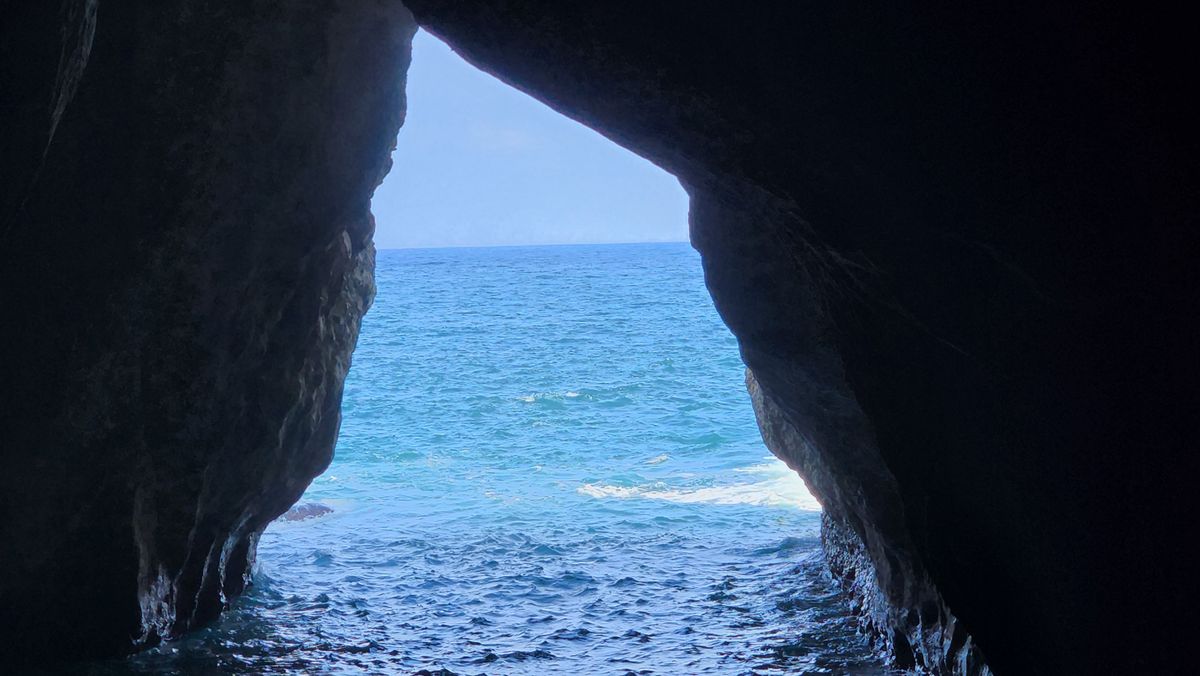
The sea grottoes at the base of the cliffs are the main attraction, and they reward attention. Carved by waves over thousands of years, they form a network of tunnels and chambers connected by walkways and lit to reveal the forms in the rock. The water inside the grottoes is an almost impossible shade of turquoise and emerald, lit by sunlight filtering through openings in the rock and reflected back off the white chalk walls. The colors shift as the angle of light changes through the day, and no two visits look quite the same.
On calm days, the water moves gently through the chambers and the sound is a low surge and retreat. On stormy days, the waves crash through the tunnels with a force that reverberates off the stone walls like thunder, and the spray rises to the walkway level. The grottoes change character completely with sea conditions, which is one reason visitors who have seen them on a calm summer afternoon are sometimes startled by the same place in winter. The park provides access to several connected chambers, and the walkways allow visitors to move between them and observe the water from close range, though the mood of the sea on the day of your visit will shape the experience entirely.
The Cable Car
Getting down to the grottoes requires a cable car ride that drops approximately 70 meters at a gradient of 60 degrees, making it one of the steepest cable car descents in the world. The ride takes about two minutes each way, and it is more than a convenience, the view on the way down, white cliffs to either side, blue sea below, and the Lebanese coastline stretching northward, is worth the visit on its own. The descent is steep enough to feel dramatic, and the cars are small enough that the exposure to the cliff face is immediate and close.
At the bottom, the walkway leads through the illuminated grottoes, with viewing platforms at the points where the sea enters the caves. The entire visit to the grottoes takes about 30 to 45 minutes, but most people find themselves lingering, watching the water move through the rock and trying to capture the colors with a camera that will inevitably fall short.
The Ladder of Tyre and Ancient History
Rosh Hanikra has been a landmark since antiquity. Ancient sources refer to this stretch of coast as the Scala Tyriorum, the Ladder of Tyre, a name that described the cliff-cut path that travelers used to pass between the coastal plain and the Phoenician cities to the north. The headland was the last negotiable point on the coast before the cliffs became impassable, making it a mandatory crossing for anyone moving between what is now Israel and what is now Lebanon. Alexander the Great is said to have passed through here on his march south in 332 BCE. Roman roads crossed the headland. For millennia, the Ladder of Tyre was one of the defining geographical features of the Levantine coast, and the armies of the ancient and medieval worlds all passed through the same narrow gap in the cliffs.
The British Tunnel and the Bridge
During World War II, the British built a railway tunnel through the headland connecting Palestine to Lebanon and Beirut as part of their wartime logistics network. The tunnel remained in use after the war. In March 1948, Haganah fighters blew up the bridge connecting the two railway tunnels at Rosh Hanikra, cutting the rail link between Palestine and Lebanon and severing one of the last overland connections between the two territories. The ruined tunnel entrance is still visible near the cable car station, a reminder of the headland’s strategic importance in a more recent conflict.
Where Israel Ends
Rosh Hanikra sits at Israel’s northernmost point on the Mediterranean coast, directly on the border with Lebanon. The border crossing at this point has been closed to civilian traffic for decades. A UN observation post marks the line between the two countries, and the clifftop viewpoint allows visitors to see clearly where the Israeli coastline ends and the Lebanese coastline begins, two countries, visible simultaneously, separated by a fence and a world apart.
The contrast sharpens the experience. On the Israeli side, a well-maintained national park with a cable car, a visitor center, a cafe, and picnic areas on the clifftop. Nesting seabirds occupy the chalk ledges above the grottoes, and the surrounding area is part of a nature reserve rich in Mediterranean scrub and coastal flora. The beauty of the landscape at Rosh Hanikra is real and undeniable, and it only sharpens the awareness of where exactly you are standing, at the edge of the country, where the cliffs meet the sea and the sea meets the border. Nearby, the Crusader fortress at Yehi’am and the old city of Akko make natural companions for a full day along the northern coast, stretching south toward Haifa and its bay.
Visit with Hoshen Tours
A visit to Rosh HaNikra pairs beautifully with nearby destinations along your route. Consider combining it with a stop at Akko or Knights Halls in Akko, both just a short drive away. Many travelers also enjoy exploring Yehiam Fortress and Keshet Cave on the same day, while Kibbutz Hanita offers another worthwhile addition to your itinerary. Your Hoshen Tours guide will craft a seamless route that brings each destination to life with expert commentary and insider knowledge.
Ready to experience Israel in true colors?
Plan Your TourPrivate tours designed around your interests, schedule, and pace.