



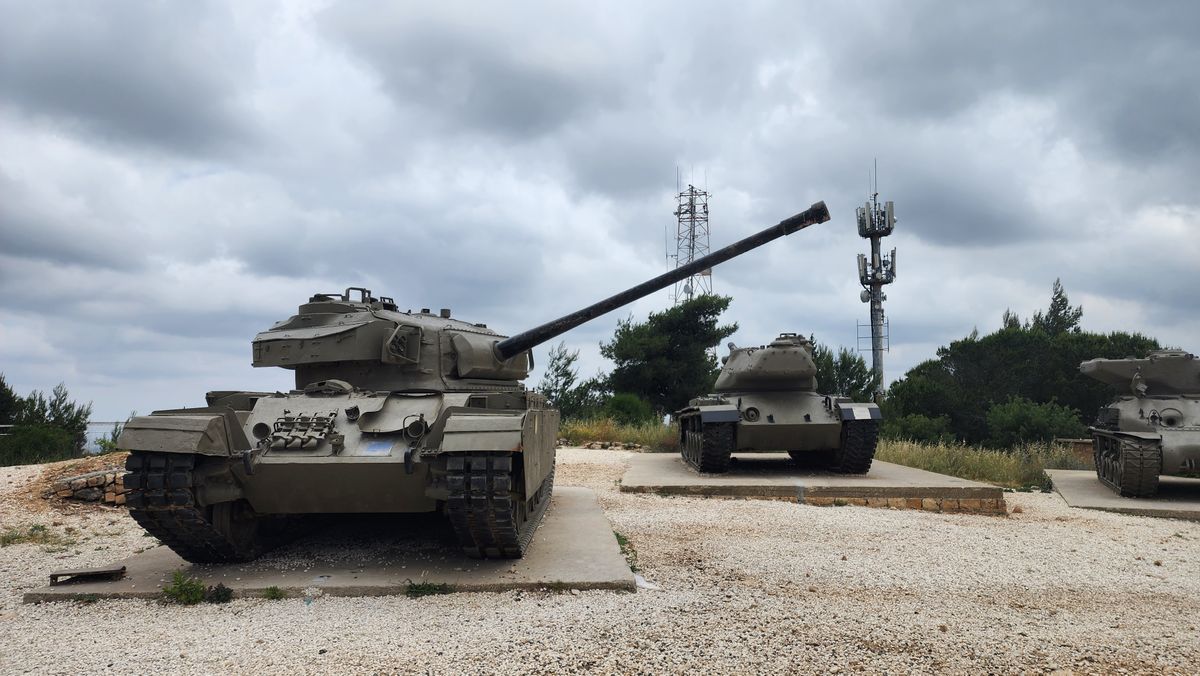
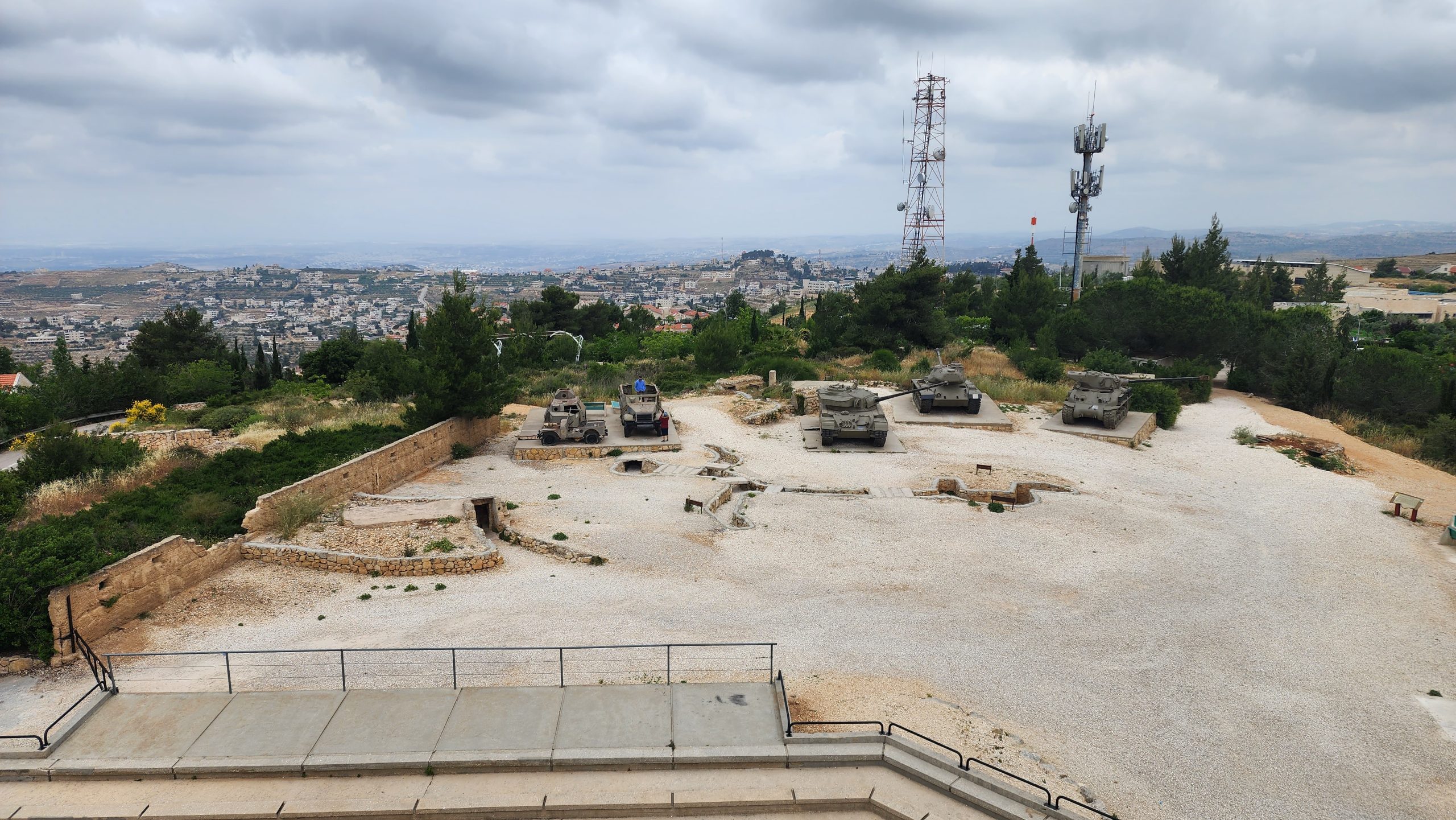
The Harel Brigade Memorial stands on Har Adar, a hilltop in the Judean Hills west of Jerusalem, overlooking the narrow corridor through which the road to Jerusalem winds. This is the memorial to the Palmach brigade that fought, under the command of 26-year-old Yitzhak Rabin, to break the siege of Jerusalem in 1948, in some of the bloodiest and most critical battles of the War of Independence.
The Harel Brigade
The Harel Brigade (the 10th Palmach Brigade, whose name means “Mountain of God”) was established in April 1948 specifically to fight in the Jerusalem corridor, the steep, narrow passage through the Judean hills that was the only land route connecting the coastal plain to Jerusalem. Its commander, Yitzhak Rabin, would later become IDF Chief of Staff, lead the army in the Six-Day War, and serve twice as Prime Minister before his assassination in 1995. But in 1948 he was a young officer commanding desperate operations in these hills.
Uri Ben Ari and the Armored Breakthrough
Among the officers who shaped the brigade’s legacy was Uri Ben Ari, born Heinz Benner in Berlin, Germany, in 1925. As a teenager he escaped Nazi Europe and made his way to Palestine, where he joined the Haganah and later the Palmach. During the 1948 war, Ben Ari served as an armored commander and led repeated attempts to break through to besieged Jerusalem with columns of armored vehicles along the winding roads of the corridor. The terrain was brutally unfavorable for armor. Narrow roads cut through steep valleys, with Arab forces firing down from the ridgelines above. Ben Ari’s crews pushed forward under intense fire, often in improvised armored trucks rather than proper tanks, losing vehicles and men in the ravines below. His determination and tactical skill under these conditions earned him a reputation that carried through his later career. Ben Ari went on to command the 7th Armored Brigade during the 1956 Sinai Campaign and played a significant role in armored doctrine development in the IDF.
The Battle of Nebi Samuel
One of the fiercest engagements fought by the Harel Brigade was the battle for Nebi Samuel, the hilltop believed by tradition to hold the Tomb of Samuel the Prophet, rising north of Jerusalem with commanding views of the surrounding hills. During Operation Yevusi in April 1948, the brigade fought to seize this critical high ground. Whoever held Nebi Samuel controlled the northern approach to the Jerusalem road. The fighting was close and brutal, with Palmach fighters ascending the steep slopes at night under fire. The hilltop changed hands more than once, and casualties on both sides were heavy. The ancient site, sacred to Jews, Christians, and Muslims alike, became a battlefield where young soldiers fought among centuries-old stone walls. The Harel Brigade’s struggle for Nebi Samuel exemplified the wider pattern of the corridor battles, in which every hilltop was a strategic prize and every ridge could mean the difference between an open road and a death trap.
The Jerusalem Corridor Battles
In the spring of 1948, Jerusalem’s 100,000 Jewish residents were under siege. The Arab forces, including the Jordanian Arab Legion, Palestinian irregulars, and volunteers from across the Arab world, controlled the hilltops along the road, ambushing convoys and cutting off food, water, and ammunition. The Harel Brigade was thrown into the fight to break through.
The corridor itself was a narrow strip of land barely 10 kilometers wide in places, running through the Judean foothills between the coastal plain near Ramle and the western outskirts of Jerusalem. Every convoy that attempted the passage had to run a gauntlet of fire. The most dangerous stretch passed through Sha’ar HaGai (Bab el-Wad), a narrow gorge where the road climbed through steep hillsides. Burned-out vehicles from ambushed convoys lined the roadside, and some of their rusted hulks remain there to this day as memorials. Drivers and escorts knew that entering the gorge meant risking everything, yet the convoys continued because Jerusalem could not survive without them.
The brigade fought at the Battle of Castel (April 1948), where the strategic hilltop changed hands repeatedly and the Palestinian commander Abd al-Qadir al-Husseini was killed. It participated in Operation Nachshon, the first large-scale operation aimed at opening the road, and helped secure the Burma Road, the improvised bypass that saved Jerusalem when the direct route through Latrun could not be taken. Approximately 418 soldiers of the Harel Brigade were killed in these operations, an extraordinary casualty rate that reflects the intensity of the corridor fighting.
The Harel Brigade Memorial
The memorial stands at 880 meters above sea level, with a sweeping view of the Jerusalem corridor below, the very terrain over which the brigade fought. Stone monuments and plaques list the names of the fallen soldiers, arranged by unit and operation. A central stone structure anchors the memorial, with paths leading to lookout points from which visitors can trace the route of the old road through the valley. Standing here, looking down at the winding road through the forested hills, visitors understand viscerally why controlling these hilltops meant controlling access to Jerusalem. On a clear day the view stretches from the coastal plain in the west to the towers of Jerusalem in the east, and the full scope of the corridor becomes visible. The peaceful pine forests that cover the hills today bear no trace of the fighting, but the memorial does not let you forget.
Visit with Hoshen Tours
The Harel Brigade Memorial is where the story of 1948 and the battle for Jerusalem becomes geography. Hoshen Tours visits the hilltop to tell the story of Rabin, Ben Ari, the corridor, and the brigade that broke through to the Holy City. The site pairs with Latrun, the Burma Road, Sha’ar HaGai, and the Castel for a full day tracing the 1948 battle for the road to Jerusalem. Hoshen Tours often combines this site with Chagall Windows Hadassah, Tomb of Lazarus, and Rachels Tomb for a memorable day exploring the region.
Ready to experience Israel in true colors?
Plan Your TourPrivate tours designed around your interests, schedule, and pace.