



When the frontal assaults on the Latrun fortress failed in May-June 1948, the Israelis found another way to save Jerusalem. Engineers and laborers, working under fire and often at night, carved a bypass road through the rocky hills south of Latrun, avoiding the Arab Legion positions entirely. The story of the Burma Road is one of the most dramatic episodes of the 1948 war, a tale of desperation, improvisation, and the refusal to abandon 100,000 people to siege and starvation.
Jerusalem Under Siege
By late May 1948, Jerusalem was starving. The city’s only supply route from Tel Aviv ran through the narrow Bab al-Wad gorge and past the Latrun police fortress, where the Jordanian Arab Legion and local forces ambushed Jewish convoys with devastating effect. The wrecks of armored trucks along the road became symbols of the failed effort. Multiple Israeli military assaults on the Latrun fortress failed with heavy casualties. With food and water rationed, ammunition running out, and no military solution in sight, the decision was made to find an alternative route through the hills, bypassing Latrun entirely.
Building the Road
The road, named after the Burma Road of World War II (which bypassed Japanese positions in Southeast Asia), was barely passable. Construction crews worked through the night to avoid detection and air attacks, cutting through rocky terrain with basic hand tools. Trucks ground up the steep grades in low gear, and in places the road was so rough that supplies had to be carried by hand or on donkeys. Hundreds of workers, many of them elderly volunteers from Jerusalem, carried sacks of flour on their backs along the steepest sections. The route was never a proper road in any engineering sense. It was a lifeline scraped from the hillside, just enough to get trucks through.
The Siege Is Broken
The first convoy reached Jerusalem via the Burma Road on June 1, 1948. The siege was broken. Jerusalem would not fall. Supplies flowed in, morale was restored, and the city held through the remaining months of the war. The Burma Road, improvised in desperation, saved a city of 100,000 people from starvation and surrender. Within weeks, engineers improved the route into a proper road. Today’s Highway 1 follows the original route through Sha’ar HaGai, but the Burma Road bypass through the hills to the south remains as a memorial trail-Tel Aviv highway through the Judean foothills.
David “Mickey” Marcus
The Burma Road is inseparable from the story of Colonel David “Mickey” Marcus, an American military officer who volunteered to help Israel during the 1948 war. Marcus, a West Point graduate who had served on Eisenhower’s staff during World War II and helped plan the Normandy landings, arrived in Israel in early 1948 and was appointed the first aluf (general) in the Israeli army since Judah Maccabee, a title given to him by Ben-Gurion. Marcus helped organize the chaotic Israeli forces, brought professional military planning to the war effort, and was instrumental in the decision to build the bypass road. He was tragically killed by friendly fire on June 11, 1948, just hours before the first ceasefire took effect, shot by an Israeli sentry who did not recognize him in the dark. He is buried at West Point. His story was the subject of the 1966 film “Cast a Giant Shadow,” starring Kirk Douglas.
The Convoy Wrecks
Along the highway from Tel Aviv to Jerusalem, rusted skeletons of armored trucks and makeshift vehicles have been preserved as memorials at the roadside. These are the remains of the convoys that tried to break through the Latrun ambushes before the Burma Road was built. The vehicles, many of them civilian trucks fitted with improvised armor plating, were attacked by Arab forces firing from the ridges above. The wrecks were left in place after the war as a memorial, and today every bus and car on the way to Jerusalem passes them. For visitors arriving in Jerusalem from Ben Gurion Airport, they are often the first monument of Israeli history they encounter.
The Trail Today
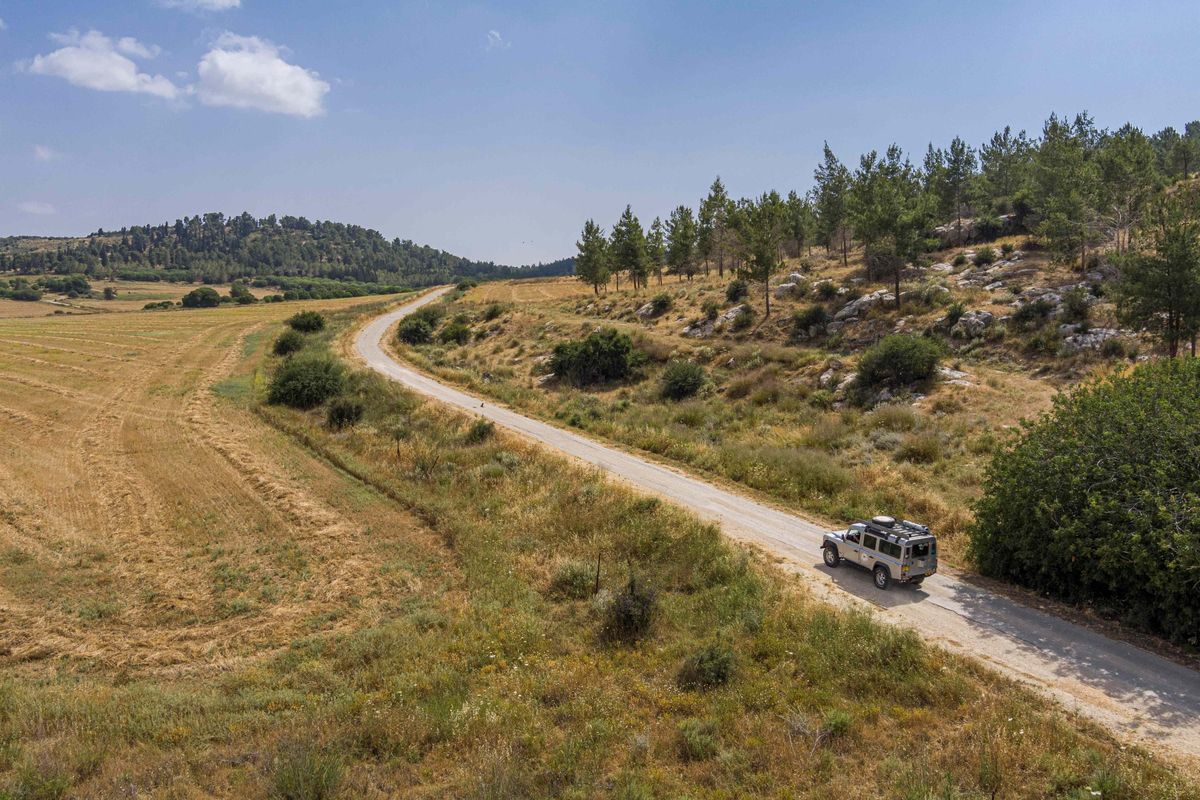
Sections of the original road are preserved as a memorial trail in the hills west of Jerusalem. The rusted remains of supply trucks and armored vehicles that made the journey are displayed along the route. Walking the trail, you can see the steep grades and rocky terrain that the trucks and porters navigated in the dark. Interpretive signs mark key points along the route, and the physical difficulty of the terrain makes the achievement tangible in a way that no museum exhibit can. The trail is relatively short and accessible, making it suitable for most visitors.
Visit with Hoshen Tours
The Burma Road was the improvised lifeline that broke the siege of Jerusalem in 1948, carved through rocky hills by hand when the main road was blocked. Hoshen Tours drives sections of the original route, telling the story of the desperate effort to get food and water to 100,000 starving civilians. Walking the trail today, surrounded by peaceful forest, it is hard to imagine the urgency of those weeks. Combine it with Latrun, the gateway at Sha’ar HaGai, the Ayalon Valley, and Yad LaShiryon.
Explore Our Tour Collection
Ready to experience Israel in true colors?
Plan Your TourPrivate tours designed around your interests, schedule, and pace.