



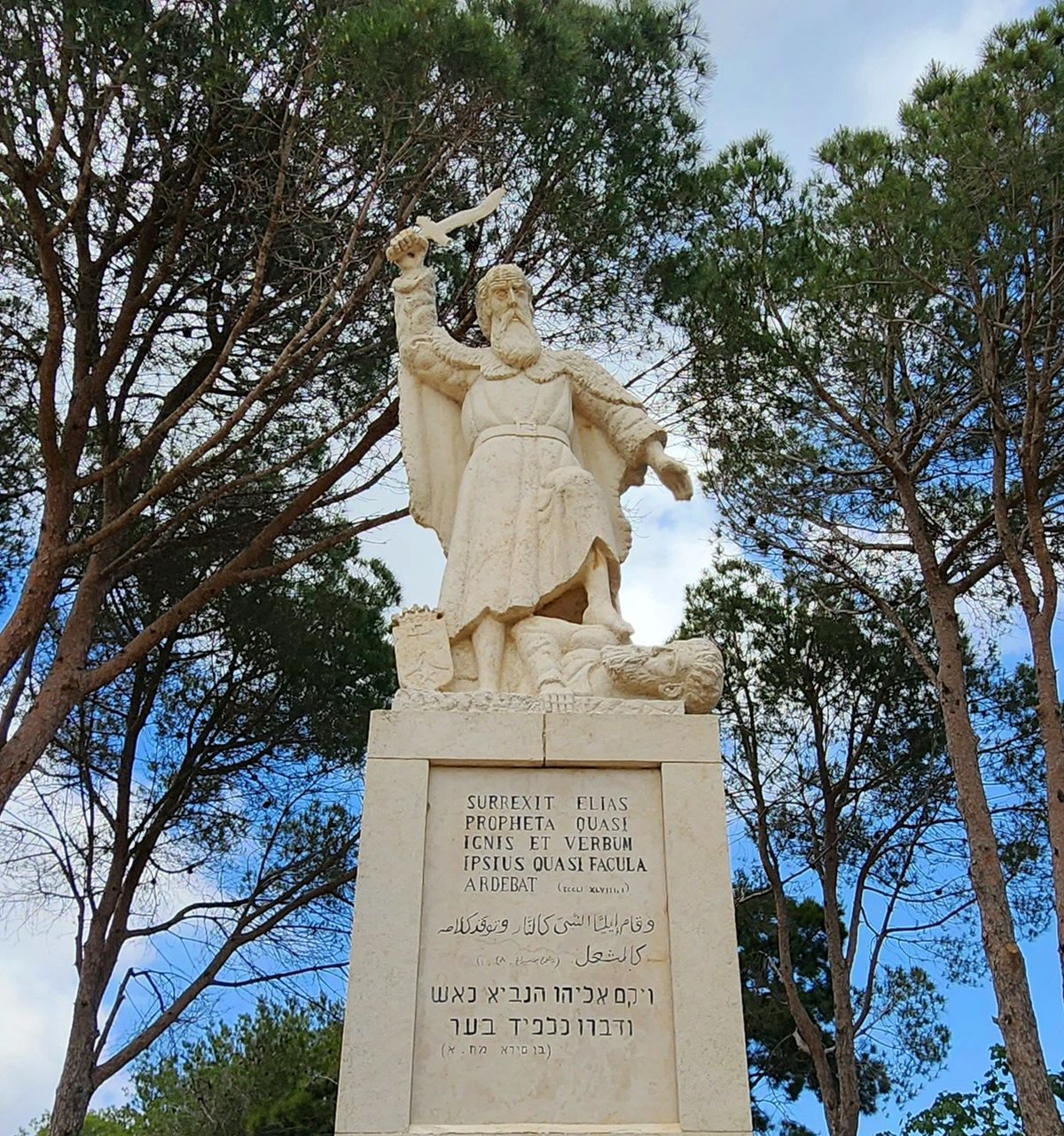
On Mount Carmel, Muhraka (from the Arabic “place of burning”) is the traditional site of one of the most dramatic episodes in the Hebrew Bible: the contest between the prophet Elijah and the 450 prophets of Baal on Mount Carmel. The site, on the southeastern ridge of the Carmel range overlooking the Jezreel Valley, is marked by a Carmelite monastery with a statue of Elijah, sword raised, standing over the defeated priests of Baal.
Elijah’s Contest on the Mountain
King Ahab and his Phoenician queen Jezebel had promoted the worship of Baal throughout Israel, building a temple to Baal in Samaria and killing the prophets of the Lord. Elijah, the last prophet standing, challenged them to a public test on Mount Carmel: “How long will you waver between two opinions? If the Lord is God, follow him; but if Baal is God, follow him” (1 Kings 18:21). The people said nothing.
Two altars were prepared with bulls as sacrifices. The prophets of Baal called on their god from morning until noon: “Baal, answer us!” But there was no response. They danced around the altar. Elijah mocked them: “Shout louder! Surely he is a god! Perhaps he is deep in thought, or busy, or traveling. Maybe he is sleeping and must be awakened” (1 Kings 18:27). The prophets of Baal shouted louder, slashing themselves with swords and spears until their blood flowed, but still nothing happened.
Then Elijah rebuilt the altar of the Lord with twelve stones representing the twelve tribes of Israel. He dug a trench around it, laid the wood and the bull, and then did something extraordinary: he drenched the sacrifice with water, not once but three times, until the water filled the trench. In a land suffering from drought, water was more precious than gold, and Elijah poured it out as an act of supreme faith.
“Answer me, Lord, answer me, so these people will know that you, Lord, are God” (1 Kings 18:37). Then the fire of the Lord fell and burned up the sacrifice, the wood, the stones, the soil, and the water. “When all the people saw this, they fell prostrate and cried, ‘The Lord, he is God! The Lord, he is God!’” (1 Kings 18:38-39). Elijah then ordered the prophets of Baal seized and taken to the Kishon Brook below, where they were put to death.
Fire From Heaven, Then Rain
After the contest, Elijah told Ahab: “Go, eat and drink, for there is the sound of a heavy rain” (1 Kings 18:41). Elijah climbed to the top of Carmel and prayed, sending his servant seven times to look toward the sea. The seventh time, the servant reported: “A cloud as small as a man’s hand is rising from the sea” (1 Kings 18:44). Within minutes, the sky grew black with clouds and wind, and heavy rain fell, ending the three-and-a-half-year drought that had punished Israel for its idolatry. The view from Muhraka toward the Mediterranean, where Elijah’s servant watched for the cloud, makes this part of the story vivid.
Traditions of Elijah
Elijah is one of the most important prophets in all three Abrahamic faiths. In Judaism, Elijah never died but was taken to heaven in a chariot of fire (2 Kings 2:11), and he is expected to return before the coming of the Messiah: “See, I will send the prophet Elijah to you before that great and dreadful day of the Lord comes” (Malachi 4:5). A chair is set for Elijah at every circumcision ceremony. A cup of wine is poured for him at every Passover Seder, and the door is opened for him to enter. In Christianity, Jesus identified John the Baptist as the return of Elijah: “If you are willing to accept it, he is the Elijah who was to come” (Matthew 11:14). Elijah appeared alongside Moses at the Transfiguration on Mount Tabor: “There appeared before them Moses and Elijah, talking with Jesus” (Matthew 17:3). In Islam, Elijah (Ilyas) is honored as a righteous prophet: “And Elijah was indeed one of the messengers” (Quran 37:123).
Carmelite Connection
The Carmelite Order, which maintains the monastery at Muhraka, was founded on Mount Carmel in the 12th century by Crusader hermits who came to the mountain to follow Elijah’s example of solitary prayer. Elijah is the spiritual father of the Carmelites, and his cave at Stella Maris is the other Carmelite center on the mountain. The statue at Muhraka, depicting Elijah with his sword raised over the fallen prophets, captures the moment that defines both the prophet and the mountain.
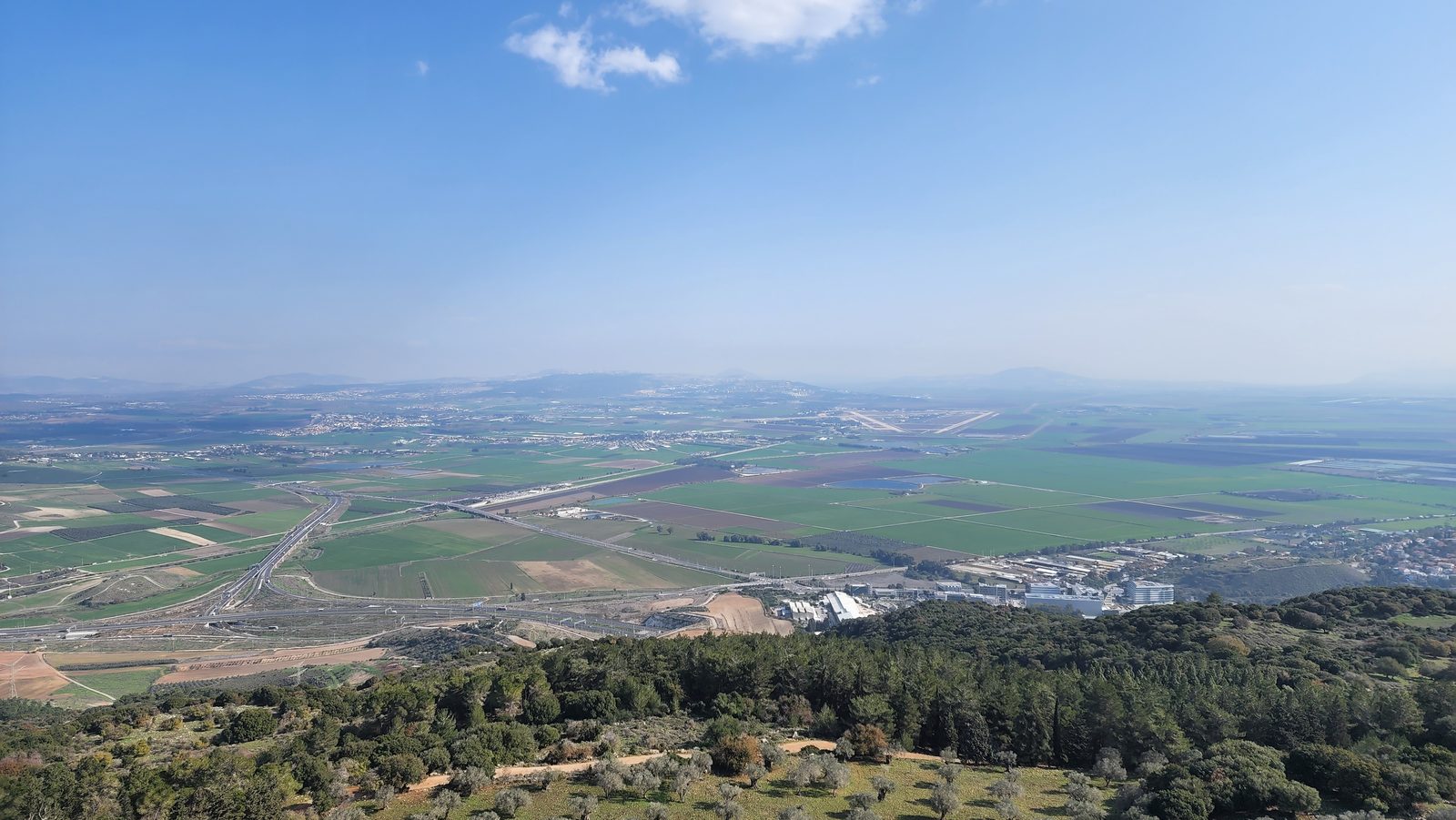
The View of the Jezreel Valley from Muhraka
The view from Muhraka is one of the finest in northern Israel. The entire Jezreel Valley stretches east to Mount Gilboa and Mount Tabor. The Kishon Brook, where the prophets of Baal were executed, flows through the valley below. The Druze villages of the Carmel are nearby. On a clear day, the snow-capped peak of Mount Hermon is visible in the far north. Looking west toward the Mediterranean, you see the direction from which Elijah’s servant watched the cloud rise from the sea.
Visit with Hoshen Tours
Muhraka is where the battle between monotheism and paganism was fought and won. Hoshen Tours reads 1 Kings 18 at the site, tells the full story from the drought to the fire to the rain, and connects the landscape to the narrative with the Kishon below and the sea beyond.
Ready to experience Israel in true colors?
Plan Your TourPrivate tours designed around your interests, schedule, and pace.