



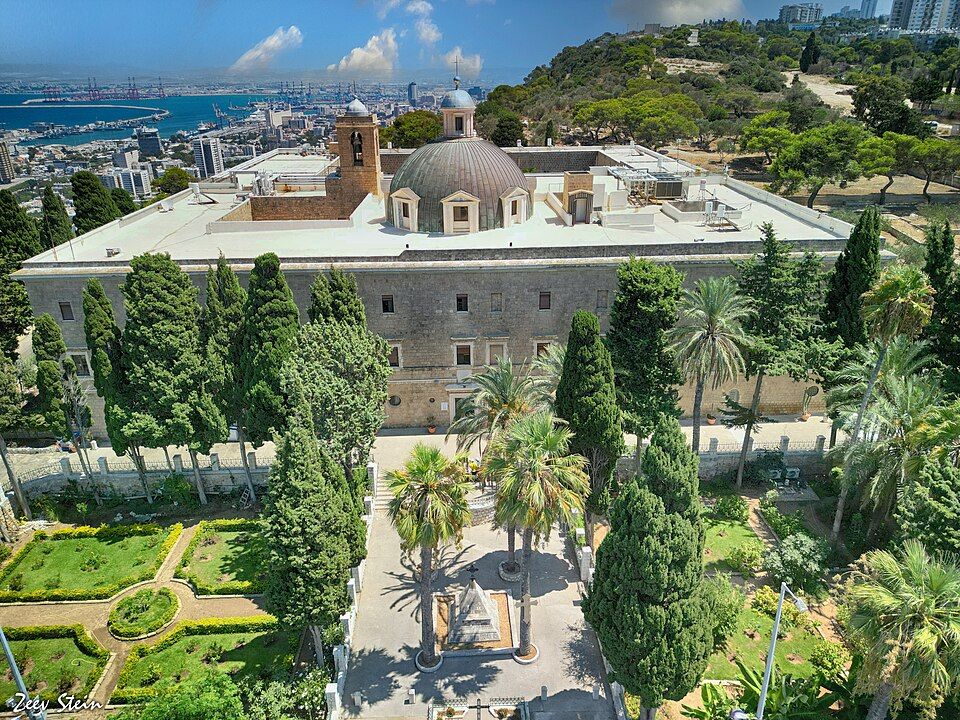
The Stella Maris Israel Carmelite Monastery sits on the peak of the Carmel ridge above Haifa, overlooking the Mediterranean Sea, the Haifa Bay, and the Galilee mountains. The monastery is the world headquarters of the Carmelite Order, a Catholic religious order founded on this mountain in the 12th century by Crusader hermits who came to Mount Carmel to follow the example of the prophet Elijah. The name Stella Maris, “Star of the Sea,” is a title of the Virgin Mary, the patron saint of the Carmelites, and the monastery is both a working religious community and one of the most visited Christian sites in northern Israel.
Elijah on Mount Carmel
Mount Carmel is Elijah’s mountain. It was here that the prophet challenged the 450 prophets of Baal to the contest that became the defining moment of Israelite monotheism: “The god who answers by fire, he is God” (1 Kings 18:24). The full story of the contest, the fire, and the rain that followed is told at Muhraka, on the southeastern ridge of the Carmel.
But Elijah’s connection to Carmel goes deeper than the Baal contest. The Bible describes Elijah as a man who sought solitude on this mountain. After the contest, he climbed to the top of Carmel and “bent down to the ground and put his face between his knees” (1 Kings 18:42), praying for rain in a posture of absolute humility. And after his victory, when Queen Jezebel threatened to kill him, Elijah fled southward in despair: “I have had enough, Lord. Take my life” (1 Kings 19:4). God answered not with fire this time, but with silence: “After the earthquake came a fire, but the Lord was not in the fire. And after the fire came a gentle whisper” (1 Kings 19:12). The “still small voice” (kol demama daka) is one of the most profound theological moments in the Bible, and it happened to a man who knew both the fire of Carmel and the silence of the desert.
Cave of Elijah
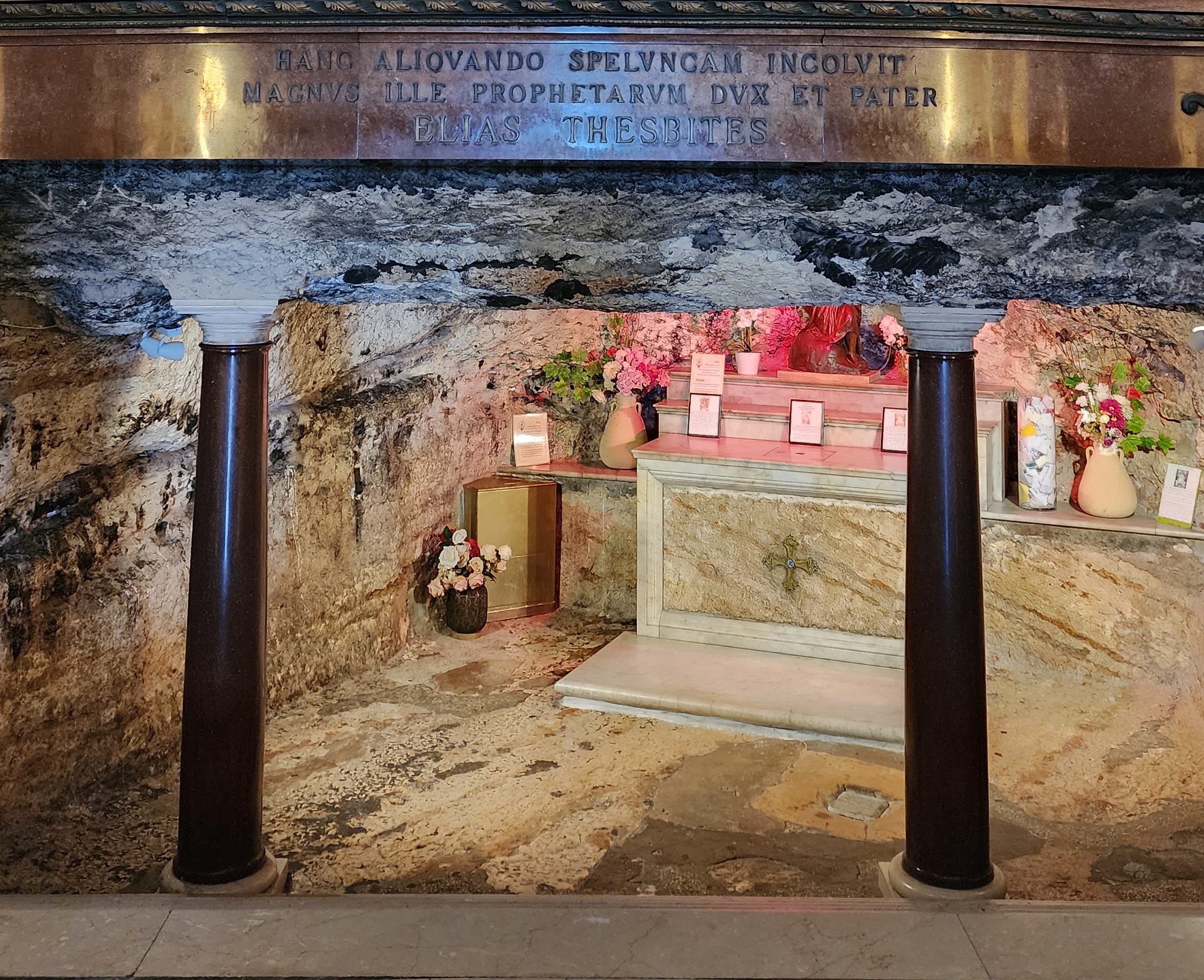
Beneath the altar of the Stella Maris church, a cave is venerated as the place where Elijah lived and meditated. The cave has been a site of pilgrimage since at least the Byzantine period, and it is sacred to Jews, Christians, Muslims, and Druze. Jewish tradition identifies it as the cave where tradition holds that Elijah hid from Ahab and Jezebel. Christian tradition associates it with the Holy Family’s rest on the return from Egypt. Muslim tradition connects it to al-Khidr, the “Green One,” a mystical figure associated with Elijah. And the Druze venerate Elijah as one of their most important prophets. The cave is accessed by a short staircase that descends from the church floor into the bedrock of Mount Carmel. The chamber is small, rough-hewn, and ancient, a stark contrast to the Baroque elegance of the church above. A simple altar marks the spot where tradition holds that Elijah prayed. The experience of descending from the painted dome and marble columns into the raw rock of the mountain is one of the most powerful transitions in any church in the Holy Land.
A separate site, Elijah’s Cave at the base of the mountain near the sea, is also identified with the prophet and is visited by all four faiths.
Carmelite Order
The Carmelite Order was founded around 1185 by a group of Crusader hermits who settled on Mount Carmel to live a life of prayer and solitude in imitation of Elijah. They received a rule (a set of guidelines for religious life) from the Latin Patriarch of Jerusalem, Albert of Vercelli, around 1209. The rule emphasized silence, solitude, prayer, and manual labor, and it remains the foundation of Carmelite life today.
When the Crusaders were expelled from the Holy Land in 1291, the Carmelites moved to Europe, where they became one of the great mendicant orders of the Catholic Church. St. Teresa of Avila and St. John of the Cross, two of the most important mystics in Christian history, were Carmelites. St. Therese of Lisieux, one of the most beloved saints of the modern era, was a Carmelite nun. All of them traced their spiritual lineage back to Elijah on this mountain. The Carmelites returned to Mount Carmel in the 17th century and have maintained a continuous presence since then.
Architecture and Interior
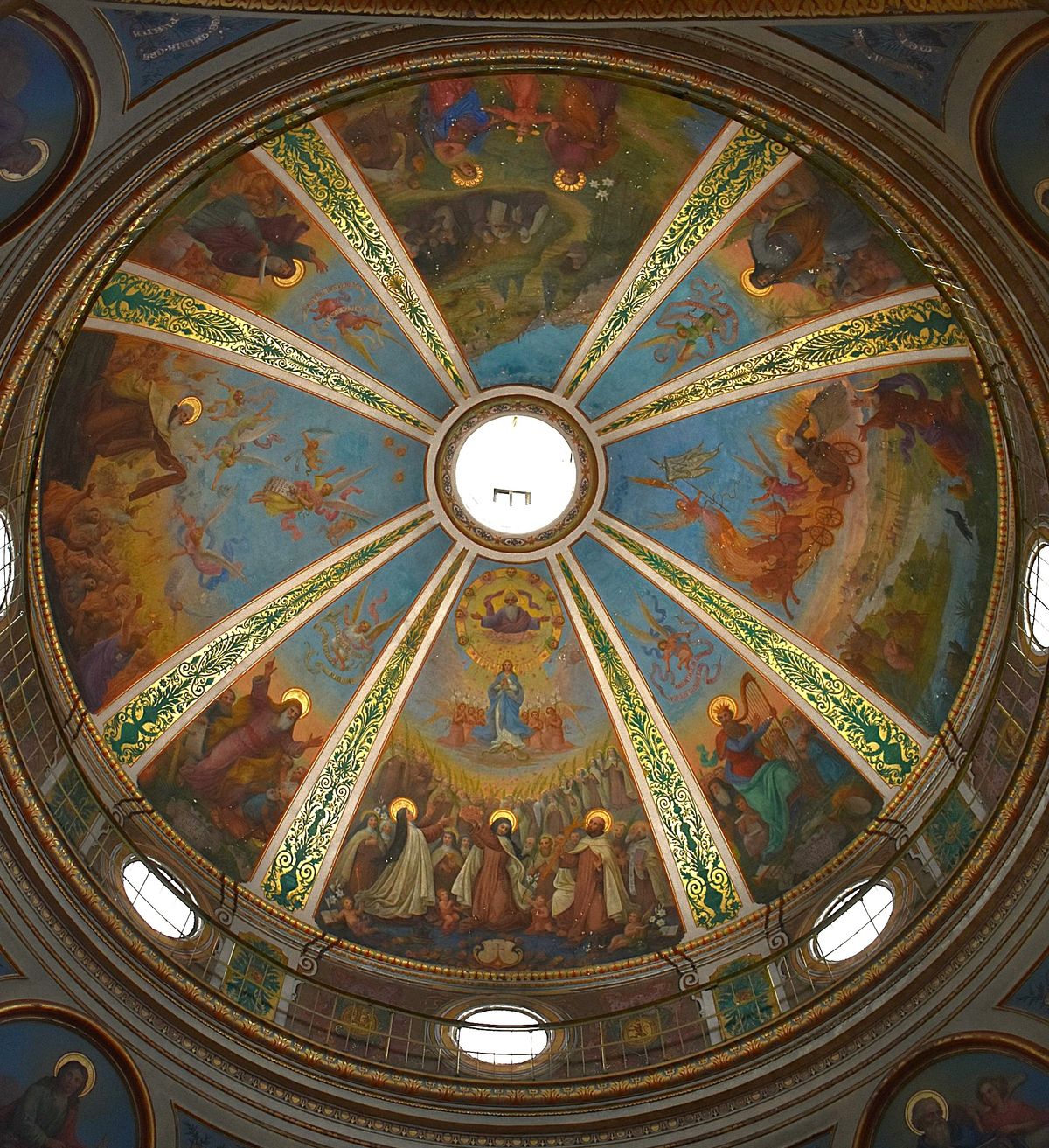
The current church was built in 1836 after the previous church was destroyed by the Ottoman governor Abdullah Pasha. The building is designed in the Italian Baroque style, with a dome painted by Brother Luigi Poggi depicting scenes from Carmelite history and the life of Elijah: the prophet ascending to heaven in a chariot of fire, the Virgin Mary as Stella Maris, and the Carmelite saints. The cedarwood statue of the Virgin and Child above the altar, carved in Italy from cedar of Lebanon wood and covered in painted silk, is the devotional center of the church.
Four White Marble Plaques
Inside the church, four white marble plaques are dedicated to Carmelite saints, each telling a story that connects this mountain to the wider Carmelite world:
Miriam Bawardi (1846-1878): A Christian from the town of Ibilin in the lower Galilee, her throat was slit after she refused to convert to Islam, and she was left for dead. Upon awakening, she found herself being cared for by a nun dressed in blue, whom Miriam recognized as the Virgin Mary. She later founded the Carmelite monastery in Bethlehem, bringing the Carmelite Order back to the Holy Land from which it had originated.
Edith Stein (1891-1942): A German Jewish philosopher who converted to Christianity after reading “the autobiography (The Life of Teresa of Jesus)” by Teresa of Avila. She joined the Carmelite Order and took the name Teresa Benedicta of the Cross. She was murdered in Auschwitz by the Nazis. Her plaque depicts “The Interior Castle” surrounded by barbed wire, a cross, and a Star of David, a powerful image of a woman who carried both identities to her death.
Teresa of Avila (1515-1582): The great Spanish mystic who reformed the Carmelite Order and wrote “The Interior Castle,” a masterwork of spiritual literature describing the soul’s journey toward God through seven mansions of increasing intimacy. Her plaque symbolizes the defense of inner truth against external evil.
John of the Cross (1542-1591): Teresa’s collaborator, mystic, and the author of “The Dark Night of the Soul.” His plaque depicts a mountain with two curvy paths and one straight path leading to a cross at the summit, inscribed with “Nothing, Nothing, Nothing” (Nada, Nada, Nada), signifying the journey to God through absolute self-emptying. The straight path of renunciation reaches the summit; the winding paths of worldly attachment do not.
The four plaques, luminous white against the ornate Baroque walls, tell a story that spans from 16th-century Spain to 20th-century Auschwitz to a Galilean village, all connected by a thread that leads back to Elijah in the cave beneath these plaques.
Napoleon’s Connection
In 1799, Napoleon Bonaparte launched his ambitious campaign to conquer the Holy Land, marching north from Egypt with dreams of building a French empire in the East. When his forces laid siege to Acre, the Stella Maris monastery was converted into a field hospital for wounded French soldiers. The monastery’s thick stone walls and elevated position made it a natural refuge, and the Carmelite monks tended to the injured alongside French surgeons.
The siege of Acre ended in failure — one of Napoleon’s few military defeats — and the French army retreated south. But the wounded soldiers left behind in the monastery met a grim fate: Ottoman forces entered Stella Maris and killed them where they lay. A small stone pyramid near the monastery entrance commemorates these soldiers, and the episode became one of the darker chapters in the long history of this sacred hilltop. The monastery itself was badly damaged and would not be fully rebuilt until the 1830s, when the Carmelites returned to construct the church that stands today.
Visit with Hoshen Tours
A visit to Stella Maris pairs beautifully with nearby destinations along your route. Consider combining it with a stop at Haifa or German Colony in Haifa, both just a short drive away. Many travelers also enjoy exploring Wadi Nisnas and Bahai Gardens on the same day, while Druze Villages on the Carmel offers another worthwhile addition to your itinerary. Your Hoshen Tours guide will craft a seamless route that brings each destination to life with expert commentary and insider knowledge.
Explore Our Tour Collection
Ready to experience Israel in true colors?
Plan Your TourPrivate tours designed around your interests, schedule, and pace.