



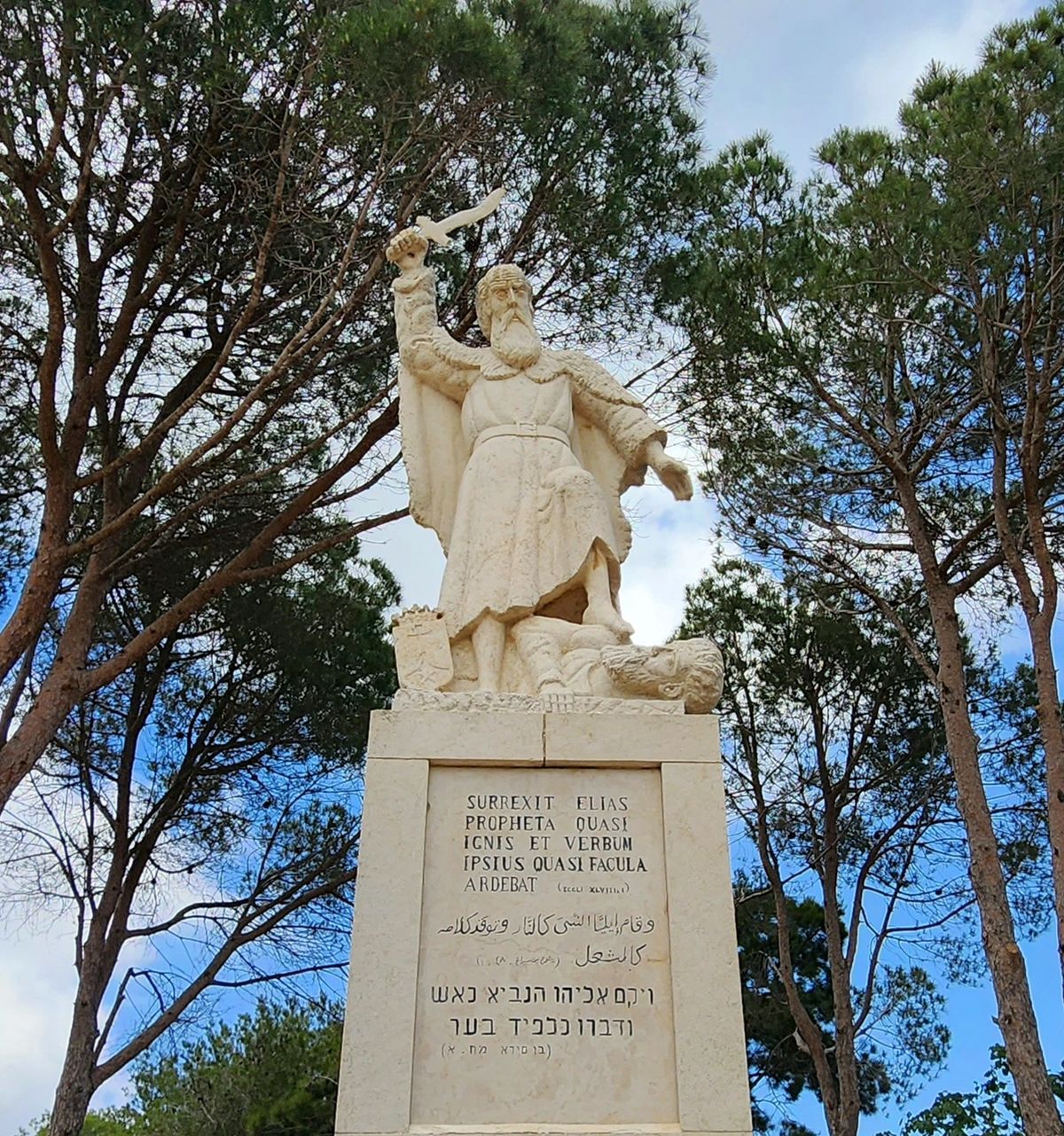
Elijah’s Cave (Me’arat Eliyahu) is a natural cave at the base of Mount Carmel in Haifa, sacred to Jews, Christians, Muslims, and Druze, all of whom venerate the prophet Elijah and believe he found shelter in this cave. The cave is one of the very few sites in Israel where four religions worship in the same space, and the atmosphere of shared reverence is remarkable.
Elijah on the Carmel – Elijah’s Cave
The prophet Elijah is inseparable from Mount Carmel. It was on this mountain that he challenged the 450 prophets of Baal and called down fire from heaven (1 Kings 18:38). It was on this mountain that he prayed for rain and sent his servant seven times to look toward the sea until “a cloud as small as a man’s hand” appeared (1 Kings 18:44). And it was on this mountain, according to tradition, that Elijah found refuge in the cave that bears his name. The Bible describes Elijah fleeing from Queen Jezebel after the contest at Carmel: “Elijah was afraid and ran for his life” (1 Kings 19:3). Whether this specific cave is the one where he hid is tradition, not archaeology, but the veneration of the site goes back at least to the Byzantine period.
Jewish Tradition
For Jews, the cave is a place of pilgrimage and prayer. Worshippers light candles, recite psalms, and leave written prayers in the cracks of the rock. The cave is particularly busy on the eve of holidays and on the anniversary of Elijah’s ascent to heaven in a chariot of fire (2 Kings 2:11). In Jewish tradition, Elijah never died and is expected to return before the coming of the Messiah: “See, I will send the prophet Elijah to you before that great and dreadful day of the Lord comes” (Malachi 4:5). Praying in the cave where he sheltered is praying in the presence of the prophet who will announce the redemption.
Christian Tradition
Christians associate the cave with the Holy Family, believing that Mary, Joseph, and the infant Jesus rested here during their return from Egypt. The cave is also connected to the Carmelite tradition: the Carmelite Order, founded on Mount Carmel in the 12th century, considers Elijah their spiritual father, and the cave is linked to Stella Maris, the Carmelite monastery on the summit above.
Muslim and Druze Traditions
Muslims venerate the cave as the place of al-Khidr (the Green One), a mystical and immortal figure associated with Elijah in Islamic tradition. Al-Khidr appears in the Quran (18:60-82) as a mysterious guide who teaches Moses that divine wisdom is beyond human understanding. The Druze, for whom Elijah is one of the most important prophets, also visit the cave for prayer and meditation. The Druze community of the Carmel villages maintains a strong connection to the site.
The Cave of Elijah on Mount Carmel
The cave itself is a medium-sized natural cavern with a vaulted ceiling, approximately 14 meters deep and 8 meters wide. The interior is simple: stone benches along the walls, candles and oil lamps, and the atmosphere of centuries of prayer. An iron gate marks the entrance, and the cave is open to visitors of all faiths during visiting hours. The experience of standing in a space where Jews light candles for Elijah, Christians pray to the Holy Family, Muslims seek al-Khidr, and Druze honor their prophet, all in the same small cave, is one of the most genuinely interfaith moments available in Israel.
Visit with Hoshen Tours
Elijah’s Cave is where four religions meet at a single rock. Hoshen Tours visits the cave and tells the Elijah traditions of all four faiths, connecting the cave to Muhraka (where Elijah defeated the prophets of Baal) and Stella Maris (the Carmelite monastery above). Hoshen Tours often combines this site with Beit She’arim, Wadi Nisnas, and German Colony (Haifa) for a memorable day exploring the region.
Explore Our Tour Collection
Ready to experience Israel in true colors?
Plan Your TourPrivate tours designed around your interests, schedule, and pace.