



On the afternoon of October 6, 1973, a small Israeli outpost on the southern Golan Heights received the full weight of the Syrian army’s opening assault. Tel Saki, a fortified position on a dormant volcanic hill, was one of the first places hit when Syria launched its surprise attack on Yom Kippur. What happened at Tel Saki in the hours that followed is one of the most harrowing stories of the war.
The Outpost
Tel Saki was one of a chain of Israeli observation posts and strongpoints that lined the ceasefire line with Syria on the Golan Heights. The position was small, manned by a few dozen soldiers, and designed primarily for observation rather than heavy combat. On the morning of Yom Kippur, the holiest day of the Jewish calendar, the garrison was at reduced strength. Many soldiers were fasting. The attack, when it came at 2:00 PM, was overwhelming.
At first, the local commanders did not understand the scale of what was happening. They assumed it was a border skirmish and sent a small reconnaissance party to Tel Saki. By the time the full picture became clear, the outpost was already surrounded.
Assault and the Siege
Syrian infantry and armor hit Tel Saki in waves. The defenders fought from their bunkers and trenches, but the numerical disparity was enormous. Syrian forces surrounded the position and poured fire into it from multiple directions. The paratroopers and infantry at Tel Saki ran out of ammunition, then food, then water.
What followed was a siege that lasted 36 hours. Twenty-eight survivors, most of them wounded, were trapped inside a bunker on the hilltop, surrounded on all sides by Syrian forces. The bunker was dark, cramped, and filling with the wounded. The soldiers could hear Syrian troops moving above them. They had no way of knowing whether rescue would come or whether the entire Golan had already fallen.
As the situation grew desperate, the commander, Ansbacher, ordered his soldiers to prepare hand grenades and remove the safety pins, ready for immediate throwing the moment the Syrians entered the bunker. The soldiers shared the last small ration of water that remained, passing around the cap of a jerrycan and drinking from it in turns.
One soldier, badly wounded and having lost his hearing, began demanding more water and would not respond to his comrades’ pleas to be quiet. With Syrian troops just meters above them, any sound could give away their position. Ansbacher ordered one of his men to silence the wounded soldier by choking him. But the soldier Avital, unwilling to carry out the order literally, found another way. He scribbled a message on a piece of cigarette paper, struck a match in the darkness, and held the note in front of the wounded man’s eyes. It read: “No water. Syrians outside. Be quiet.” The wounded soldier read it and fell silent.
The Aftermath and Memorial
At one point during the siege, a tank crewman climbed out of the bunker wearing his tanker’s overalls. He approached the Syrian forces and told them that everyone inside was dead. The Syrians, seeing his flight suit, believed they had captured an Israeli pilot, a far more valuable prize than infantry soldiers. Convinced they had secured a high-value prisoner, the Syrians abandoned the position and left the area, taking him with them. The ruse worked: the Syrians never entered the bunker, and every soldier still trapped inside survived. The tank crewman’s act of self-sacrifice saved the lives of everyone still trapped below.
Rescue attempts were launched from the Israeli rear, but the scale of the Syrian advance made reaching Tel Saki extremely difficult. Armored columns tried to fight their way through; some made it, others were turned back with heavy losses. The battle for Tel Saki became a microcosm of the entire Yom Kippur War on the Golan: small groups of Israeli soldiers fighting desperately against overwhelming odds, buying time for the reserves to mobilize.
The Cost of Holding the Line
Thirty-two Israeli soldiers were killed in the battles over Tel Saki. Many more were wounded. The survivors who emerged from the bunker after 36 hours had endured an experience that marked them for life. The battle became one of the defining stories of the Yom Kippur War, and the testimonies of the survivors, recorded in the years that followed, are among the most powerful personal accounts of combat ever documented in Israel.
The Tel Saki Israel Memorial and Bunkers
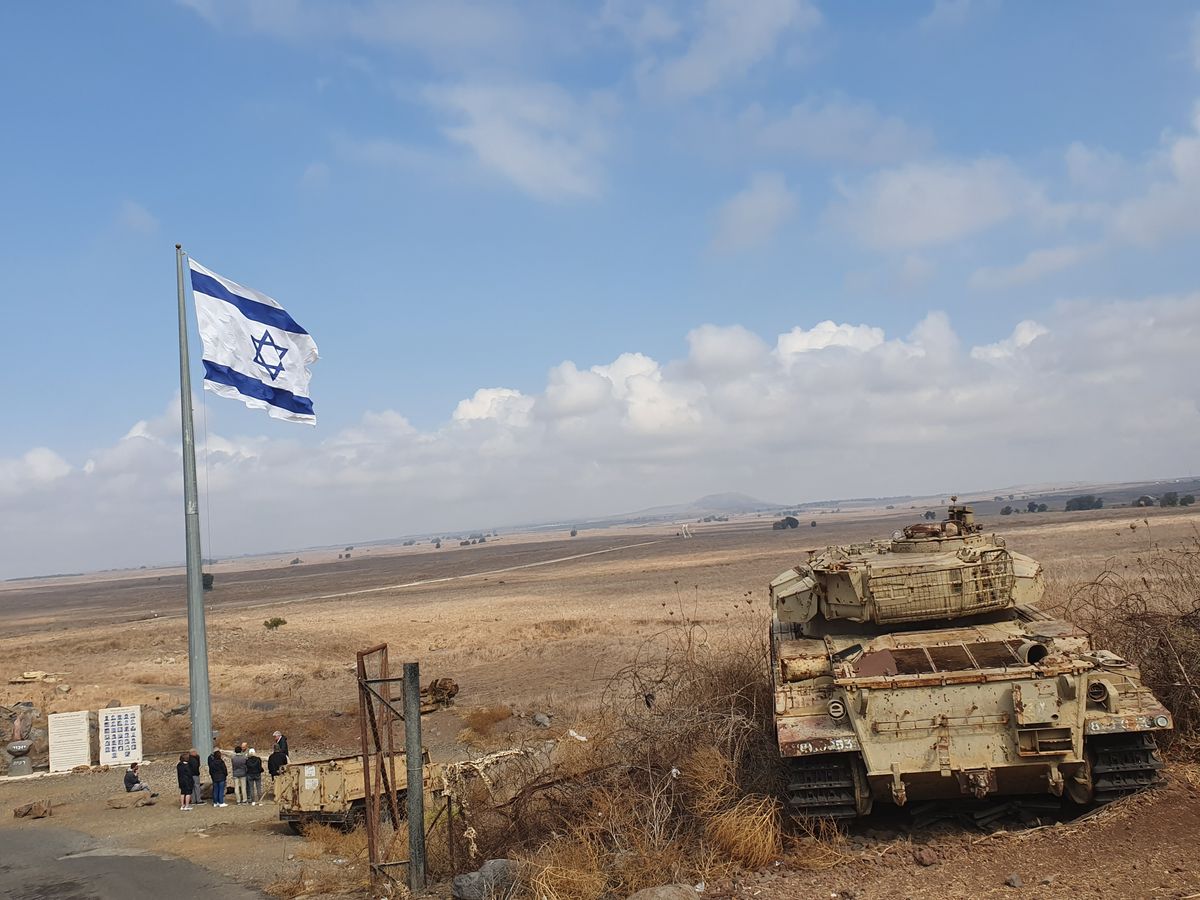
Today, Tel Saki is preserved as a memorial site. The original bunkers and trenches are intact, and visitors can walk through the positions where the battle took place. The fortifications are scarred by shrapnel and bullet impacts, and the cramped, dark corridors give a visceral sense of what the defenders experienced during those terrible hours.
A memorial monument at the site lists the names of the 32 soldiers who fell. The view from the tel encompasses the southern Golan, the Sea of Galilee to the west, and the Syrian positions to the east. Standing there, the strategic reality of the Golan Heights becomes immediately clear: whoever holds these heights controls the landscape below.
Visit with Hoshen Tours
Tel Saki is an essential part of understanding the military history of the Golan Heights. Hoshen Tours includes it in itineraries that also cover Mount Bental, the Valley of Tears, and Gamla, giving visitors a complete picture of the battles that shaped this landscape and the soldiers who fought them. Because some places speak for themselves. Tel Saki is one of them.
Nearby destinations worth combining with this stop include Battle of Tel Fakher and Syrian Military Headquarters.
Explore Our Tour Collection
Ready to experience Israel in true colors?
Plan Your TourPrivate tours designed around your interests, schedule, and pace.