



The Cathedral of St. James is the spiritual heart of the Armenian Quarter and one of the most beautiful churches in Jerusalem. Built in the 12th century over a 5th-century chapel, the cathedral is dedicated to two Jameses: James the Greater, the apostle who tradition holds was the first of the twelve to be martyred (beheaded by Herod Agrippa in 44 CE, as recorded in Acts 12:2), and James the Just, the brother of Jesus and the first bishop of Jerusalem.
Inside the Cathedral
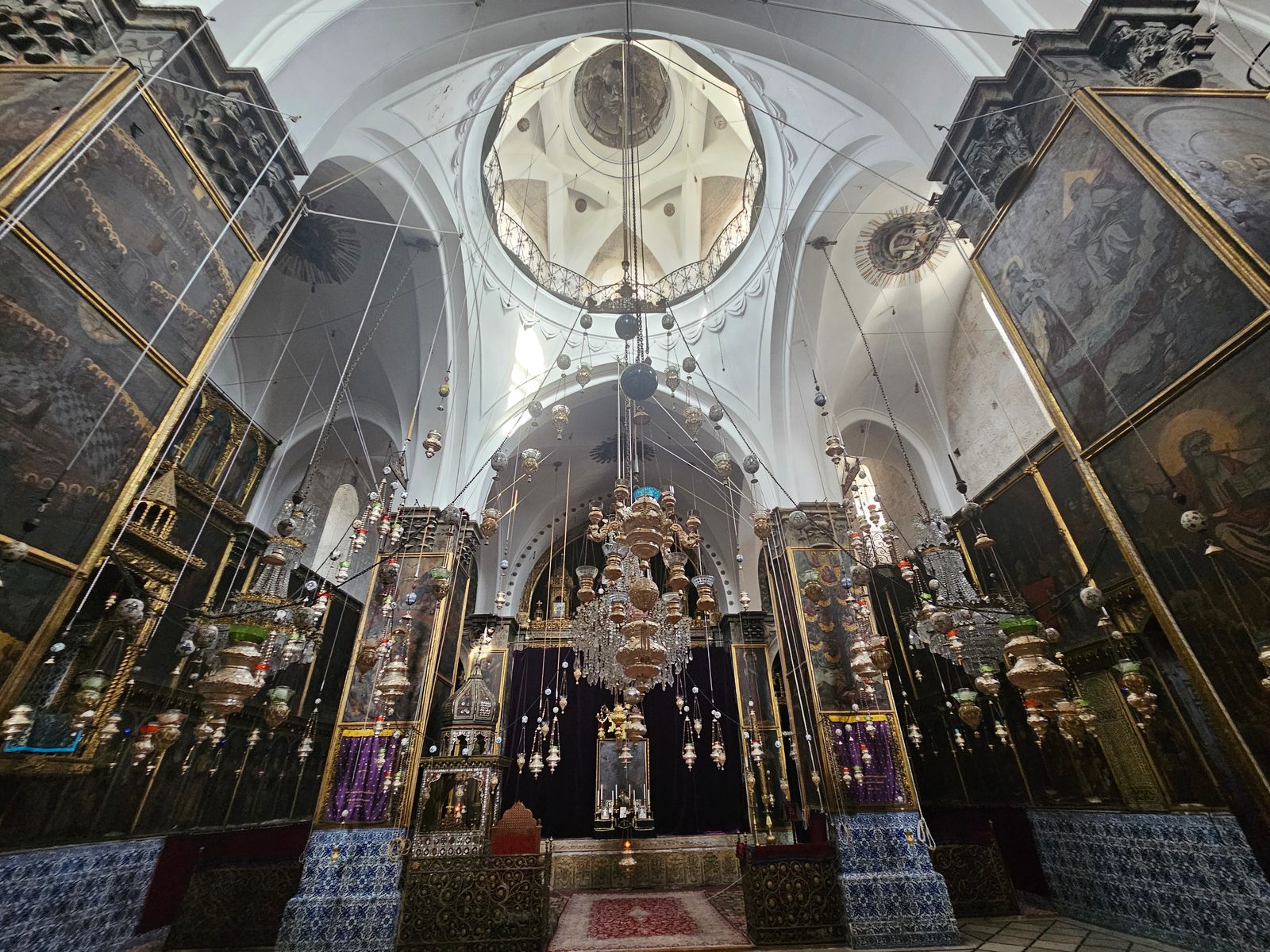
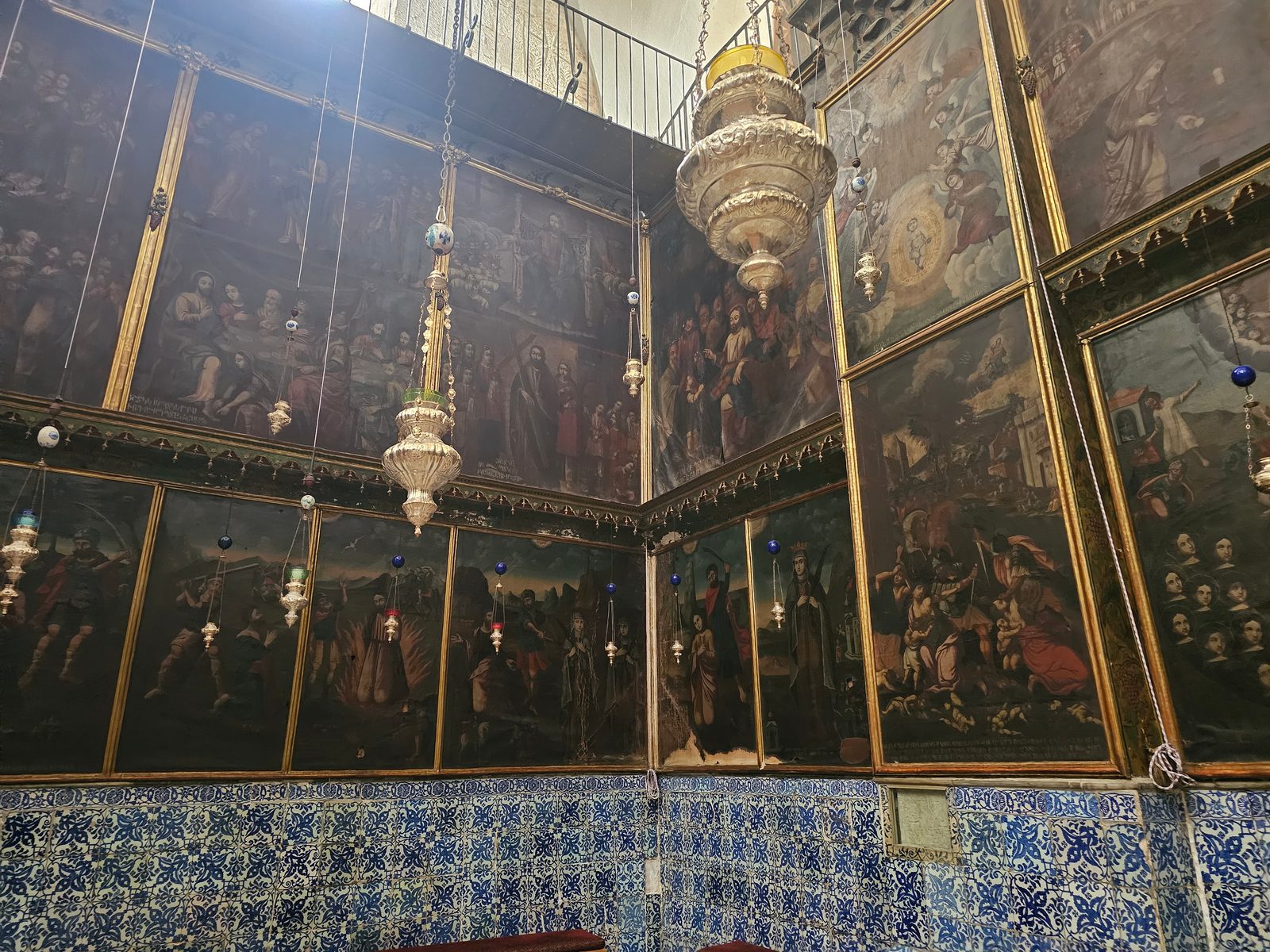
The cathedral interior is dark, intimate, and richly decorated. Hundreds of oil lamps hang from the ceiling on long chains, filling the space with a warm, flickering light. The walls are covered with blue and white Armenian tiles, handcrafted in the distinctive floral and geometric patterns that have become synonymous with Armenian art in Jerusalem. The floor is laid with carpets and rugs. There are no pews: worshippers stand during the Armenian liturgy, which is sung in the ancient Armenian language (Grabar) and accompanied by the sounds of the semantron, a wooden board struck with a mallet to call the faithful to prayer. The scent of incense permeates the space, swung from ornate censers during services, adding to the sensory richness of the experience.
Chapels and Tombs
The cathedral contains several side chapels and important tombs. The Chapel of St. James the Greater, to the left of the main altar, is believed to contain the head of the apostle. According to Armenian tradition, James was beheaded by Herod Agrippa in Jerusalem in 44 CE (Acts 12:2), and while the Catholic tradition holds that his body was taken to Santiago de Compostela in Spain (making it one of the great pilgrimage destinations in Europe), the Armenians maintain that his head remained in Jerusalem and is preserved in this chapel. The main altar area contains the throne of the Armenian Patriarch, elaborately carved and elevated. The cathedral also preserves a collection of ancient manuscripts, vestments, and liturgical objects that document centuries of Armenian worship in Jerusalem.
Restricted Access and the Living Community
The cathedral is open to visitors only during services, typically in the late afternoon (approximately 3:00-3:30 PM, but times vary). This restriction is not merely practical but reflects the cathedral’s role as the center of a living community rather than a tourist attraction. The Armenian Quarter is the smallest of the Old City’s four quarters, home to roughly 1,000 Armenians who maintain their own schools, seminary, library, and printing press within the monastery compound. The cathedral is their parish church, and the daily services maintain a rhythm of worship that has continued without interruption for centuries. Attending an Armenian service is an extraordinary experience: the ancient language, the swinging censers, the oil lamps casting shadows on the tiled walls, and the voices of the Armenian clergy create an atmosphere that feels unchanged since the Middle Ages.
The Khachkars
Set into the walls of the cathedral courtyard are several khachkars, intricately carved Armenian stone crosses. Khachkars are a distinctive Armenian art form, each one unique, with elaborate patterns of interlacing vines, rosettes, and geometric designs surrounding a central cross. The tradition of carving khachkars dates to the 9th century, and UNESCO has recognized the art as part of the Intangible Cultural Heritage of Humanity. The examples at St. James were brought from Armenian communities across the Ottoman Empire and placed here as memorials. They are among the most beautiful examples of Armenian stonework in the Holy Land.
Visit with Hoshen Tours
The Cathedral of St. James is open only during limited afternoon hours, making timing essential for any visit. Hoshen Tours coordinates Armenian Quarter visits to coincide with the service, when the cathedral’s hundreds of hanging oil lamps are lit and the space reveals its full, atmospheric beauty. The experience is unlike anything else in Jerusalem’s Old City. Combine the Armenian Quarter with the Church of the Redeemer, the Holy Sepulchre, and a walk along the City of David for a layered exploration of Jerusalem’s history.
Related Destinations
› Armenian Museum of Jerusalem
› Via Dolorosa: The Stations of the Cross
› Church of the Holy Sepulchre
Explore Our Tour Collection
Ready to experience Israel in true colors?
Plan Your TourPrivate tours designed around your interests, schedule, and pace.