Call Hoshen Tours

Call us today!

+1-917-9055850

Contact Hoshen Tours on WhatsApp

General Information for Travelers to Israel

General Information for Travelers to Israel

Planning a trip to Israel comes with plenty of questions, especially if it is your first visit. This guide covers the essential practical information you need to know before you arrive, so you can spend less time worrying about logistics and more time enjoying one of the most fascinating countries on earth.

Currency and Payments

The official currency is the New Israeli Shekel (NIS), often written as ILS. Credit cards are widely accepted in cities, hotels, and restaurants. ATMs are easy to find throughout the country. It is a good idea to carry some cash for smaller shops, markets, and tips. Currency exchange is available at the airport and in major cities, though ATM withdrawals typically offer better rates.

Tipping Etiquette

Tipping is customary in Israel. In restaurants, a tip of 10 to 15 percent is standard when service is not included in the bill. It is also common to tip tour guides, drivers, and hotel housekeeping staff. Your guide can advise you on appropriate amounts during your trip.

Languages

Hebrew is the official language, with Arabic also widely spoken. English is commonly understood in tourist areas, hotels, and restaurants. Most road signs and public information are displayed in Hebrew, Arabic, and English, making navigation relatively straightforward for English-speaking visitors.

Safety

Israel has a highly professional security infrastructure. Tourist areas are well-protected, and millions of visitors travel safely through the country every year. As with any destination, stay aware of your surroundings and follow guidance from local authorities. Your tour guide will always keep you informed about current conditions.

Electricity

Israel uses Type H electrical plugs with a standard voltage of 220V and a frequency of 50Hz. Bring a travel adapter if your devices use a different plug type. Most modern chargers for phones and laptops are dual-voltage, but always check before plugging in.

Drinking Water

Tap water in Israel is safe to drink. The country is a global leader in water technology, including desalination and purification. Bottled water is available everywhere, but filling a reusable bottle from the tap is perfectly fine.

Getting Around

Israel has an efficient transportation network. Options include:

  • Trains connecting major cities like Tel Aviv, Haifa, and Jerusalem
  • Buses operated by Egged and other companies reaching nearly every corner of the country
  • Taxis and ride-sharing apps like Gett, widely used in cities
  • Car rentals available at the airport and in major cities

However, traveling with a knowledgeable guide and private driver is by far the most comfortable and enriching way to experience the country.

Shabbat

The Jewish Sabbath begins at sundown on Friday and ends at sundown on Saturday. During Shabbat, most public transportation stops, and many shops and restaurants close, particularly in Jerusalem and smaller towns. Tel Aviv remains largely active. Plan accordingly, and your guide will help you navigate any schedule adjustments.

Time Zone

Israel is in the Israel Standard Time (IST) zone, which is UTC+2. During daylight saving time (March through October), clocks move to UTC+3.

Emergency Numbers

Keep these numbers saved in your phone:

  • Police: 100
  • Ambulance (Magen David Adom): 101
  • Fire: 102
  • Tourist Police (Jerusalem): 02-539-1254

Having this practical knowledge in your back pocket makes everything smoother. For a trip where every detail is handled for you, Hoshen Tours takes care of the logistics so you can focus entirely on the experience.

The Desert Kingdom That Was Never Desolate: Israel and Egypt Through the Ages

The Desert Kingdom That Was Never Desolate: Israel and Egypt Through the Ages

Egypt is often imagined as an endless expanse of sand, camels, and silence. In reality, it was one of the wealthiest, most fertile, and most powerful civilizations the ancient world ever produced. A kingdom built along the Nile that had more grain than it knew what to do with, more gold than most empires could dream of, and an army that made its neighbors very, very nervous.

And no neighbor felt Egypt’s gravitational pull quite like the small, hilly land just to the northeast: the Land of Israel.

The relationship between these two lands is one of the longest-running stories in human history. It is not the neat, textbook version of wars and treaties. It is messier, more fascinating, and far more personal. A story of hunger and refuge, bondage and liberation, artistic obsession and political scheming. And the remarkable thing is: you can still see it today, walking through mosaic floors and ancient ruins across Israel. Explore our Jerusalem and Negev destination pages to plan your visit.

When the Rain Stopped, the Road Led South

There is a pattern buried deep in the biblical narrative that repeats itself almost stubbornly across the centuries: when things go wrong in the Land of Canaan, people pack up and head to Egypt.

Abraham did it when famine struck. Jacob and his entire family did it a few generations later, lured south by the promise of Egyptian grain and by a particularly well-connected son who had worked his way up from prison to Pharaoh’s right-hand man (it is, admittedly, an unusual career path). And centuries after that, when King Herod’s paranoia spiraled into the Massacre of the Innocents, Joseph and Mary took the infant Jesus and fled. Where else? To Egypt.

This was the great duality of Egypt in the eyes of Israel. Egypt saved you from starvation, but it could also enslave you. It was a place of refuge and a place of bondage. The Exodus, the foundational story of the Jewish people, is the story of breaking free from Egyptian servitude. And yet, every time disaster struck, the road south beckoned again. Old habits, it seems, die hard, even when they come with a risk of forced labor.

An Empire at the Edge of the World

Egypt’s geography created a unique kind of superpower. Surrounded by desert yet fed by the Nile, it was both isolated and enormously rich. A combination that tends to produce rulers with large armies and even larger ambitions.

The earliest recorded battle in world history is a perfect illustration. In the 15th century BCE, Pharaoh Thutmose III led his forces through the narrow Aruna Pass and surprised a coalition of Canaanite kings at Megiddo. Yes, that Megiddo, the one that would later lend its name to Armageddon. The Egyptian victory was decisive and established Pharaoh’s control over Canaan for generations.

How deep was that control? The Tel Amarna Letters, discovered in Egypt, give us a surprisingly intimate look. These are actual letters from local Canaanite rulers writing to Pharaoh, and they read less like diplomatic correspondence and more like anxious middle managers emailing the CEO. “Please send troops.” “My neighbor is attacking me.” “I am your loyal servant, I swear.” It is 3,400-year-old bureaucracy, and it is oddly relatable.

And then there is the Merneptah Stele, a victory inscription from around 1208 BCE that contains the earliest known mention of “Israel” outside the Bible. Israel appears almost as an afterthought, tucked into a list of peoples Pharaoh claims to have defeated. The very first time Israel shows up in the historical record, it is through Egyptian eyes. Egypt, as usual, got there first.

The Nile on Israeli Soil

Perhaps the most surprising evidence of this deep connection does not come from texts or battlefields. It comes from floors.

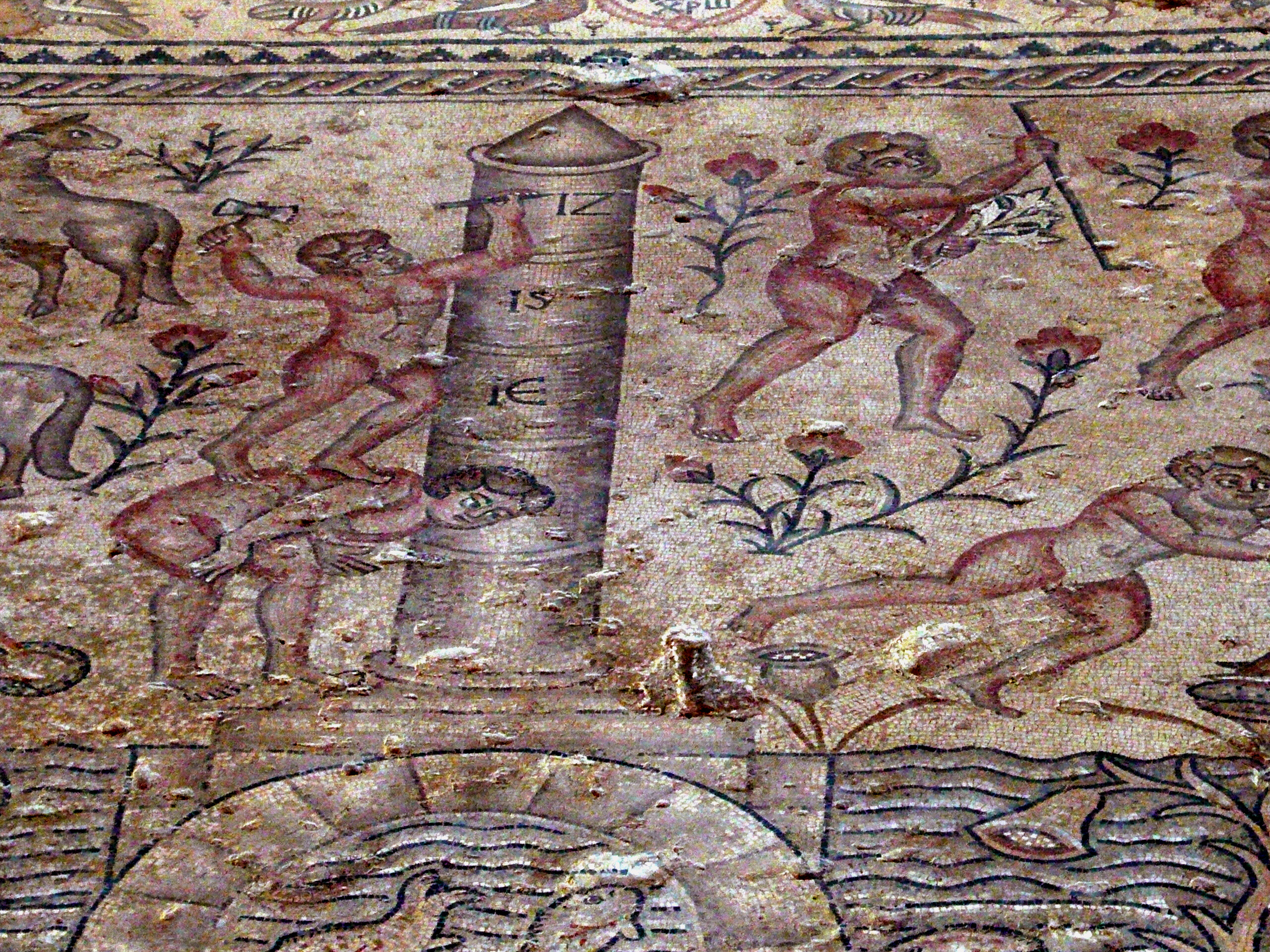
Across Israel, Byzantine-era mosaic floors feature unmistakably Egyptian imagery. Nile River scenes, complete with a Nilometer measuring the river’s sacred floods. Lotus flowers. Crocodiles. Hippopotami. These are animals that have never roamed the hills of the Galilee, and yet there they are, rendered in thousands of tiny mosaic stones by artists who clearly knew exactly what they were depicting.

The most spectacular example is the Nile House in Zippori (Sepphoris), a stunning mosaic floor that shows the Nile in full flood, teeming with exotic wildlife. A Nilometer tower stands at the center of the scene, with a man climbing up to mark the water level at seventeen cubits, the point of “plenitude” when the irrigation ditches were opened and the Nile festival began.

But Zippori is not alone. At the Church of the Multiplication of the Loaves and Fishes on the shores of the Sea of Galilee, a mosaic floor dating to the end of the 5th century features the same fascination: lotus blossoms, water birds, and another Nilometer, all rendered in careful detail in a church commemorating one of Jesus’ most famous miracles by the Sea of Galilee.

Why would artists in the Galilee, hundreds of miles from Egypt, keep returning to images of the Nile? Because the Nile was never just a river. It was a symbol of abundance, fertility, and the mysterious power of the south. Long after the political ties between the two lands had shifted, the cultural fascination refused to fade.

Conquerors, Scholars, and the Thread That Never Broke

Egypt’s wealth did not only attract hungry refugees. It attracted conquerors. Cambyses the Persian seized it. Alexander the Great claimed it and founded Alexandria, which became the intellectual capital of the ancient world. Pompey’s Rome eventually absorbed it. The Ptolemaic dynasty ruled it for centuries, blending Greek and Egyptian culture into something entirely new. Each wave of conquest reshaped the entire region, and each time, the land of Israel caught the aftershock.

But the connection between the two lands goes far deeper than politics and armies. In medieval Cairo, a synagogue storeroom preserved what would become one of the most important documentary finds in history: the Cairo Geniza. Hundreds of thousands of fragments. Letters, contracts, poems, shopping lists. A thriving Jewish community with deep ties to the Land of Israel. A thousand years of daily life, preserved by accident in the Egyptian heat.

And it was in Egypt that Maimonides, rabbi, philosopher, physician, and arguably the most influential Jewish thinker of the past millennium, served as doctor to the Sultan’s court and wrote the works that would shape Jewish thought for centuries. He chose to live in Cairo. Not bad for a city that started as a place people fled to during famines.

From Ancient Roads to Modern Peace

The ancient Via Maris, the Way of the Sea, was the highway that connected Egypt to the Land of Israel and beyond. It carried armies, merchants, refugees, and pilgrims for thousands of years. Thutmose III marched north along it. The Holy Family fled south on it. Napoleon followed it from Egypt to the walls of Acre in 1799, where he failed spectacularly, proving that not everyone who takes this road gets what they came for.

And in 1979, when Anwar Sadat and Menachem Begin signed the Camp David Accords, they were not simply ending a modern conflict. They were writing the latest chapter in a relationship that stretches back over thirty-five centuries. Two lands, bound by geography, shaped by each other’s history, and connected by a road that has never truly closed.

See It for Yourself

For travelers visiting Israel today, the Egyptian connection is not something you need to imagine. It is something you can touch. Stand at Megiddo and look across the valley where Thutmose fought the battle that gave us the word Armageddon. Walk through the mosaic halls of Zippori and see the Nile rendered in stone a thousand miles from its banks. Follow the ancient coastal road that carried empires north and south for millennia.

Egypt may be across the border, but in Israel, it has never felt far away, and it still doesn’t.

Hoshen Tours can weave these ancient connections into your itinerary, from the mosaics of the Galilee to the battlefields of Megiddo to the ports of the Mediterranean coast. Because some stories are best understood not from a textbook, but from the ground they happened on.


Museums in Israel

A Country Rich in Museums and Heritage

Israel is a very young country, just over 70 years old, but its rich history and vibrant heritage attract millions of visitors every year. A great way to get acquainted with Israel is to visit one or two of its museums.

Whether you are interested in history, archeology, arts, or maybe looking for a fun and interactive experience, Israel has over 200 museums and institutions that showcase a different aspect of the country’s life and legacy.

Every year, Israel celebrates The National Museums Day, often on the Jewish holiday of Lag Ba Omer, since it usually coincides with The International Museums Day on May 18. On that day, over 70 Israeli museums open their doors and invite visitors to a variety of free of charge tours and activities.

Following is a list of Israel’s greatest museums.

Yad Vashem Museum in Jerusalem

The main Holocaust memorial center in Israel commemorates the lives of the Jewish people who perished during WWII and of those who survived. The large complex stretches over a vast territory. It includes various memorials and museums, each exposing a different aspect of Jewish lives before, during and after the Holocaust.

The thousands of trees planted throughout the complex tell the story of the Righteous Among the Nations. Each tree has a name plaque with a name of a non-Jewish person who was ready to put his life in danger to save the life of a Jewish person.

The museum does not apply an admission fee. If you want to enhance the tour, we highly recommend taking a guided tour.

Israel Museum in Jerusalem

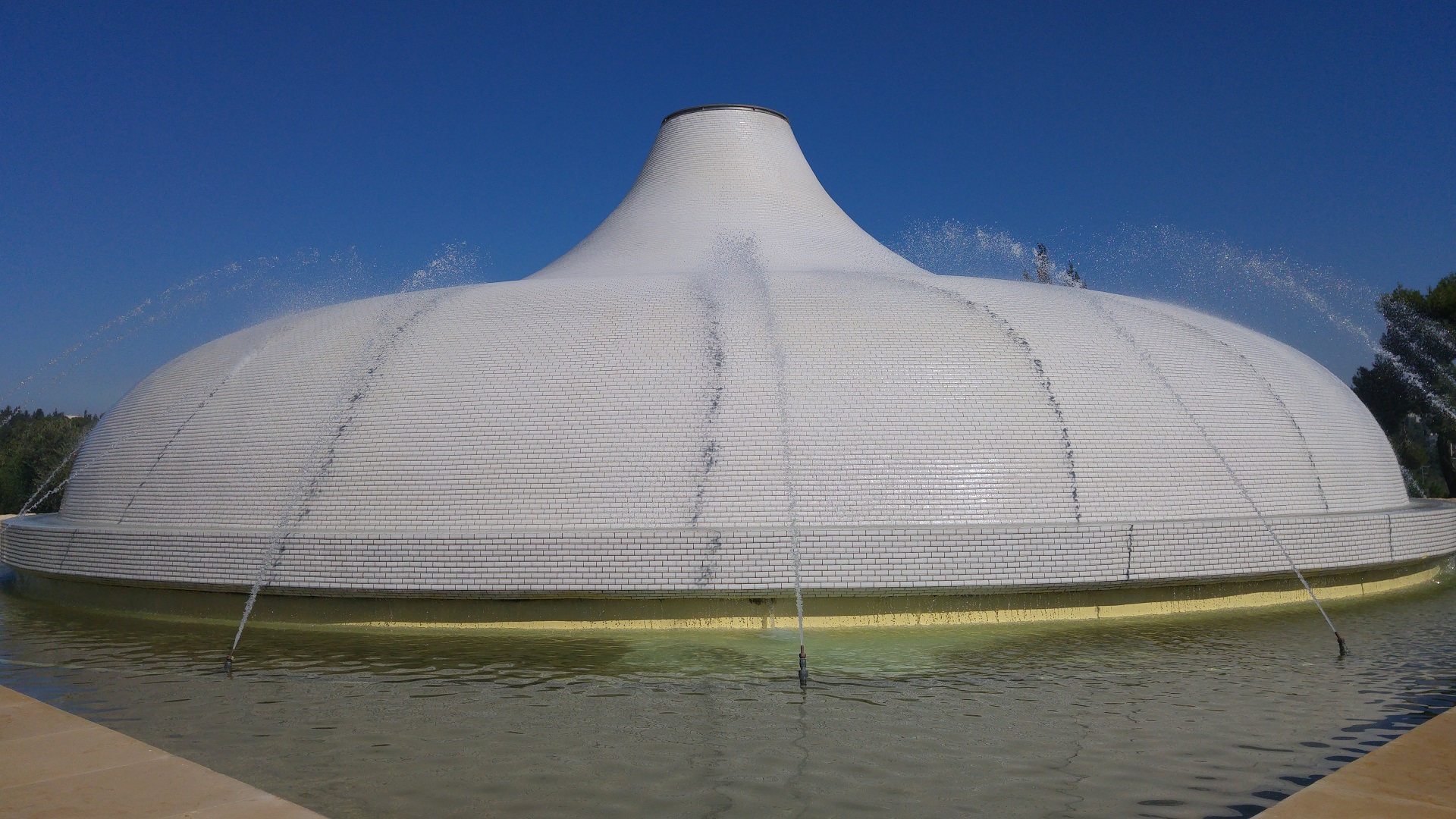
The country’s leading museum, with exhibitions of Israel’s finest archeology and art collections. A walk through the Archeology Department will take you on a journey through time while gazing at some of Israel’s most important findings. The art section showcases a wide range of works created by famous Israeli and international artists.

Additional highlights are an enormous Judaica treasury and an impressive sculpture garden. Make sure to not miss the giant Model of Jerusalem from the second-temple period, and the world-renowned Dead Sea Scrolls, which are the oldest Biblical manuscripts in the world.

The Palmach Museum, Tel Aviv

The Palmach Museum tells the story of the young men and women who dedicated their lives to defending the Jewish community in the Land of Israel prior to 1948. The Palmach organization was eventually incorporated into the Israeli Defense Forces, and it played a major role in the army’s development.

The museum is composed of several rooms, each room displays another part of Palmach’s history through a series of multimedia presentations. Walking through the rooms, you will be exposed to the fascinating life of the warriors, from recruitment and daily life to the battles and the difficult choices they had to make.

The Diaspora Museum

Also known as the Museum of the Jewish People at Beit Hatfutsot, the Diaspora Museum focuses on the culture and legacy of Jewish communities from around the world. The museum acts as a bridge, connecting visitors to the Jewish world, reinforcing Jewish identity and providing a sense of unity among Jewish people regardless of their origins.

Among the many interesting displays, you should not miss the Synagogues and Jewish Humor exhibitions.

Ayalon Institute

Composed of what was once an underground ammunition factory disguised as a laundry service in a Kibbutz. The factory was run by 45 members of the Haganah in the years prior to the establishment of the State of Israel.

In 1948, when Israel was created, the factory ceased to work and the entire area was reopened in 1987 as a museum and a heritage site. Today it is a fascinating museum that tells the stories of the 45 resistance warriors in their effort to defend the Jewish community before 1948.

Friends of Zion Museum, Jerusalem

Situated in downtown Jerusalem, the Friends of Zion Museum was created by one of Israel’s greatest allies – Pastor Mike Evans. His goal was to immortalize the help and love of non-Jewish people to the Jewish nation.

The museum is composed of 7 galleries and incorporates 3D technology which presents stories of non-Jews throughout history and highlights their significant role in fulfilling the Zionist dream.

Rockefeller Archaeological Museum

Located in East Jerusalem opposite the Old City walls, the Rockefeller Archaeological Museum is a leading archaeology museum. Built in 1938, it was the first home of the Dead Sea Scrolls and was Jerusalem’s main museum until the Israel Museum was established in 1965.

The museum displays impressive artifacts from the prehistoric era to the 19th century. Entrance is free of charge.

Ammunition Hill, Jerusalem

Ammunition Hill was an important Jordanian outpost in Jerusalem, where one of the fiercest battles of the Six-Day War took place. The position was located next to the Israeli-Jordanian border, on a higher level dominating the Old City and the adjacent Jewish and Arab neighborhoods. Israel succeeded in conquering the outpost at the cost of 36 fallen soldiers.

Today, Ammunition Hill is a memorial that tells the story of the acts of courage and determination in that difficult battle. The bunkers and trenches are still visible today.

The Independence Hall

May 14, 1948, Friday, 16:00 – a few hours before the end of the British Mandate of Palestine, David Ben Gurion declared the establishment of the State of Israel in this house.

Originally the house of the first mayor of Tel Aviv – Meir Dizengoff, nowadays the Independence Hall is a museum and a national heritage site that connects visitors to the events that brought to the declaration of Israel’s independence.

The Children Museum, Holon

A cultural and educational institution that offers a hands-on experience for children of all ages as well as adults. It was opened in 2001 and has since welcomed well over one million visitors.

The museum provides 5 story trail presentations where children actively participate in various fantasy adventures and 2 immersive exhibits that invite visitors to explore the world of people with hearing and speech impairments.

Armored Corps Museum in Latrun

Yad LaShiryon is a memorial site and a museum dedicated to the fallen soldiers of the Armored Corps. The main building used to be a British police station prior to 1948, that dominated the main road from Tel Aviv to Jerusalem.

After the British left, a series of difficult battles developed between Israel and Jordan, both wanting to have a permanent hold over this position, however it was ultimately conquered by Israel.

Nowadays, the old police station building is an Armored Corps history museum and education center. Over 160 tanks and armored vehicles are displayed around the building, most of them participated in Israel’s wars with the neighboring countries, while some of them were brought from different countries around the world. This is the most diverse tank and armored vehicle collection in the world.

Steinhardt Museum of Natural History, Tel Aviv

Located in the Tel Aviv University, the Steinhardt Museum of Natural History is Israel’s largest center for research and documentation of biodiversity, agriculture and nature conservation.

The museum is home to over 5 million specimens collected by scientists from Tel Aviv University and other institutions. It invites everybody to enjoy its fascinating exhibitions of Israel’s flora and fauna as well as human interaction with the environment throughout history.

Additional Museums to Consider

  • David Ben-Gurion’s House
  • Bible Land Museum in Jerusalem
  • Atlit Detainee Camp
  • Ilana Goor Museum in Tel Aviv-Jaffa
  • Israeli Air Force Museum
  • And many more

Explore Israel’s Museums with Hoshen Tours

With over 200 museums across the country, Israel offers something for every interest and curiosity. If you are planning a trip to Israel and want to include the best museums in your itinerary, Hoshen Tours can help you design a personalized tour tailored to your interests. Contact us to start planning your visit.

7 Moments in Israel That Will Stay With You Forever

Some trips are measured in sights seen and boxes checked. Israel is not that kind of trip. Israel is measured in moments: the seconds when the history, the landscape, the light, or the taste of something unexpected breaks through and stays with you. Here are seven of those moments.

1. Sunrise at Masada

You climb in the dark, following the Snake Path by headlamp, breathing hard in the cool desert air. At the top, you face east. The sky turns from black to indigo to orange, and then the sun breaks over the mountains of Jordan and floods the Dead Sea with gold. You are standing on a mountain where Jewish rebels made their last stand 2,000 years ago, watching the same sun they watched. The silence is total. The beauty is violent. And then the day begins.

2. Floating in the Dead Sea

You walk into water so dense with salt that it pushes you up. You lean back and float, effortlessly, the sky above and the mountains of Jordan across the water. The mineral mud on the shore is warm and smooth. The air smells of salt and desert. You are floating at the lowest point on earth, 430 meters below sea level, in water that no fish can survive, and somehow it feels like the most alive place you have ever been.

3. Touching the Western Wall

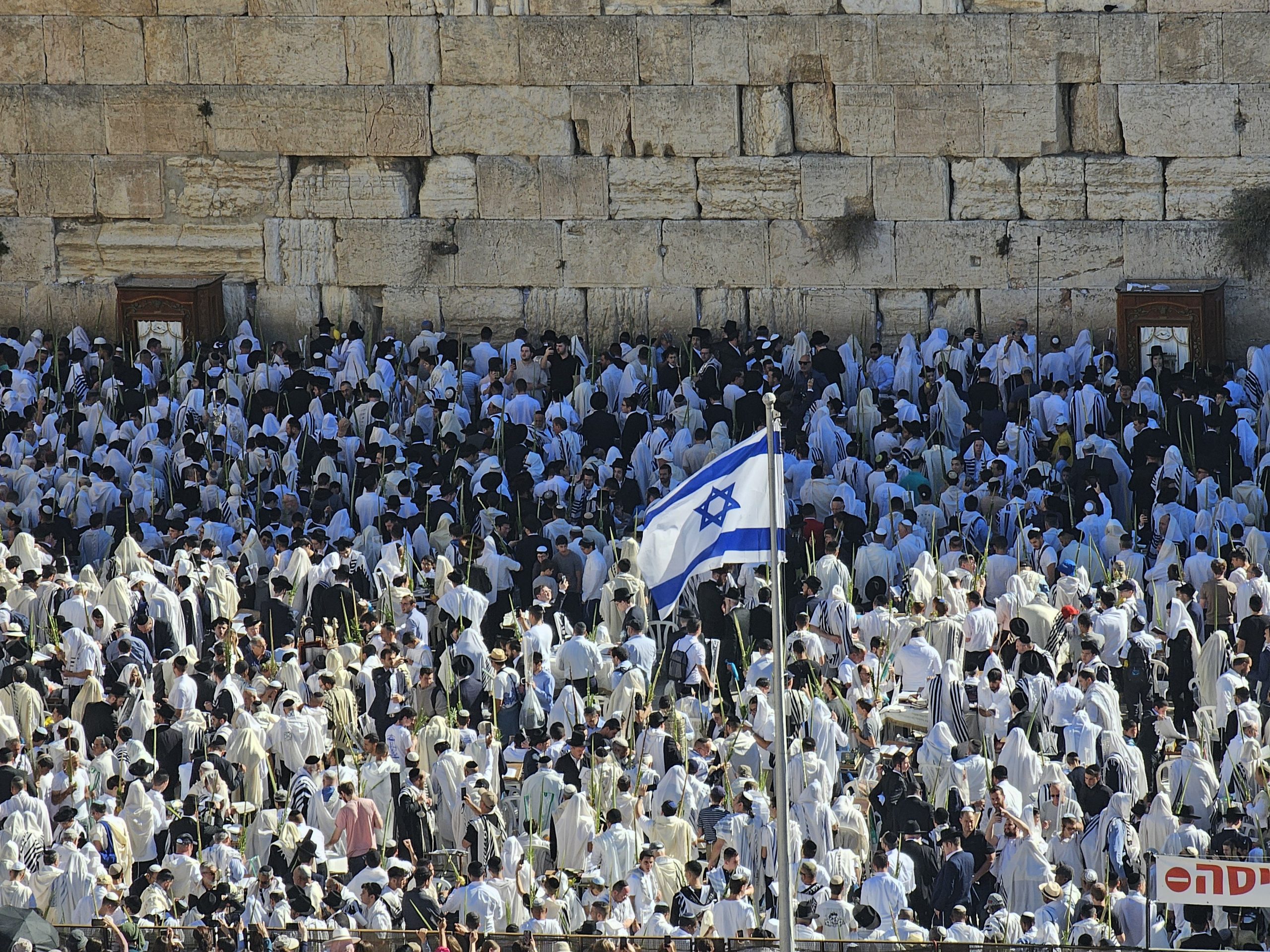
You approach the Wall through the security checkpoint, cross the plaza, and reach the ancient stones. You place your hand on the rock, and the first thing you notice is the temperature: the stone holds the warmth of 2,000 years of sun and prayer. Around you, people are whispering, swaying, crying, tucking folded notes into the cracks. The Wall does not preach. It listens. Whatever you brought with you, the Wall accepts it.

4. Walking Through the Old City

You enter through the Jaffa Gate and within minutes you are lost. The streets are narrow, the stone is golden, and every turn reveals a different world: the spice market, the Via Dolorosa, a synagogue hidden behind a metal door, a mosque you hear before you see, a church you smell before you enter (incense). Four quarters, three faiths, 3,000 years, and you can walk around the whole thing in an hour. But you will not. Because every corner stops you.

5. Standing at the Edge of the Ramon Crater

You walk to the rim of the crater and the ground drops away. 500 meters straight down, 40 kilometers across, and nothing but colored rock, silence, and sky. The crater is not a crater (no meteor, no volcano) but an erosion cirque, a geological formation found nowhere else on earth except the Negev. At sunset, the rocks turn red, then purple, then black. The stars come out, and because there is no light pollution, the Milky Way is visible in a way you have never seen.

6. Tasting Your Way Through the Market

Jerusalem‘s Machane Yehuda, Tel Aviv’s Carmel Market, Akko’s Old City souk: the markets of Israel are where the country’s diversity explodes on your tongue. Fresh hummus, still warm. Falafel that crunches and melts. Pomegranate juice squeezed in front of you. Halva in 20 flavors. Kubaneh from Yemen, jachnun from Iraq, bourekas from Turkey. The vendor insists you taste before you buy. You taste everything. You buy more than you planned.

7. Sunset from Jaffa

You walk through the ancient port, past the galleries and the fishermen and the mosque, and you find a bench facing west. The sun drops toward the Mediterranean, and Tel Aviv’s skyline, all glass and Bauhaus white, glows behind you. The old port is 4,000 years old. The city behind you is barely 100. The sun sets between them, and for a moment, the oldest and the youngest are the same color: gold.

Visit with Hoshen Tours

These moments cannot be scheduled, but they can be made possible. Hoshen Tours designs every itinerary to create the conditions for these experiences: the right place, the right time, the right story, and the space to let the moment happen.

Israeli Cuisine: A Food Lover’s Guide

Israeli food is bold, fresh, and endlessly varied. Shaped by waves of immigration from across the Middle East, North Africa, Europe, and beyond, it is a cuisine built on fusion long before that word became trendy. From humble street food to refined restaurant dining, eating in Israel is one of the highlights of any visit.

The Classics You Must Try

Certain dishes define the Israeli culinary experience. Hummus in Israel is nothing like the supermarket version you may know. Served warm, silky smooth, and drizzled with olive oil and whole chickpeas, it is eaten with fresh pita for breakfast, lunch, or anytime in between. Falafel, crispy on the outside and herb-green on the inside, is stuffed into pita with salads, pickles, and tahini. Shakshuka, eggs poached in a rich tomato and pepper sauce, is the ultimate Israeli breakfast, best enjoyed with crusty bread for soaking up every drop.

Street Food Worth Seeking Out

Israeli street food is legendary for good reason. Beyond falafel and hummus, look for these favorites:

  • Sabich: A pita stuffed with fried eggplant, hard-boiled egg, tahini, amba (mango pickle), and fresh salad. Originally an Iraqi-Jewish breakfast, it has become one of Israel’s most beloved sandwiches.
  • Shawarma: Slow-roasted meat shaved from a rotating spit, served in pita or laffa bread with an array of salads and sauces.
  • Burekas: Flaky pastry parcels filled with cheese, potato, spinach, or mushrooms, perfect for a quick snack on the go.
  • Fresh-squeezed juice: Pomegranate and orange juice stands are everywhere, and the quality is outstanding.

The Fine Dining Revolution

Over the past two decades, Israel has emerged as a serious fine dining destination. Chefs draw on the country’s multicultural heritage and extraordinary local produce to create dishes that are distinctly Israeli yet globally sophisticated. Tel Aviv and Jerusalem both have thriving restaurant scenes with establishments earning international recognition. The emphasis on seasonal, locally sourced ingredients means menus change frequently and always feel vibrant.

Markets That Feed the Soul

Machane Yehuda in Jerusalem is the country’s most famous market. Known simply as “The Shuk,” its narrow lanes overflow with fresh produce, spices, baked goods, and prepared foods. At night, many of the stalls transform into bars and small restaurants, creating a completely different atmosphere. In Tel Aviv, the Carmel Market offers a similarly vibrant experience with an emphasis on fresh fruit, vegetables, cheeses, and street food stalls. Both markets are essential stops for any food-loving visitor.

The Israeli Salad Tradition

No Israeli meal is complete without a finely chopped salad of tomatoes, cucumbers, onions, and herbs dressed simply with olive oil and lemon juice. The quality of the produce is remarkable. Israel’s agricultural innovation means that even in the desert, tomatoes, peppers, and herbs grow with incredible intensity of flavor. Do not be surprised if a simple salad becomes one of your most memorable meals.

A Growing Wine Scene

Israel’s wine industry has matured into one of the most exciting in the world. More than 300 wineries produce wines ranging from robust reds in the Judean Hills to crisp whites from the Golan Heights. Wine tours and tastings are increasingly popular and pair perfectly with the country’s outstanding food culture.

Eating your way through Israel is one of the great pleasures of visiting. Hoshen Tours can build culinary experiences into your itinerary, from market tours with a local chef to reservations at the country’s best restaurants, ensuring you taste the very best Israel has to offer.

Hiking in Israel: Top Trails You Shouldn’t Miss

Israel may be small, but its hiking scene is extraordinary. From lush green valleys in the north to dramatic desert canyons in the south, the landscape shifts every few kilometers. Whether you are a seasoned trekker or a casual walker, Israel offers trails that will leave you breathless in the best possible way. Here are seven hikes that belong on every adventurer’s list.

The Israel National Trail

Stretching over 1,100 kilometers from Dan in the north to Eilat in the south, the Israel National Trail is one of the world’s great long-distance hikes. Named by National Geographic as one of the top 20 epic trails on the planet, it traverses forests, deserts, mountains, and coastline. Most visitors tackle individual sections rather than the full route, and every segment reveals a different face of the country.

Ein Gedi Nature Reserve

Nestled along the western shore of the Dead Sea, Ein Gedi is a desert oasis that feels almost magical. The reserve features several marked trails leading to freshwater pools and waterfalls, including the popular David’s Waterfall. Along the way, you may spot ibex perched on rocky ledges and hyrax sunning themselves near the paths. The contrast between the arid desert surroundings and the lush green canyon is unforgettable.

Makhtesh Ramon

The Ramon Crater is the world’s largest erosion crater, a geological wonder measuring 40 kilometers long and 500 meters deep. Hiking into the makhtesh reveals colorful sandstone formations, ancient fossils, and a silence so deep you can hear your own heartbeat. Several trails range from short loops along the rim to full-day descents into the crater floor. The night sky here, far from city lights, is spectacular.

Mount Arbel

Overlooking the Sea of Galilee, Mount Arbel offers one of the most dramatic cliff-face hikes in Israel. The trail includes metal rungs and handholds as you navigate steep rock faces, rewarding you with panoramic views of the Galilee, the Golan Heights, and Mount Hermon. The hike is moderately challenging and can be completed in about two hours.

The Jesus Trail

This 65-kilometer trail connects Nazareth to Capernaum on the shores of the Sea of Galilee, following a route that traces the footsteps of Jesus through the Galilean countryside. The four-day walk passes through Arab and Jewish villages, ancient ruins, olive groves, and rolling hills. It is a deeply meaningful journey for pilgrims and a beautiful cultural experience for all hikers.

Banias Waterfall

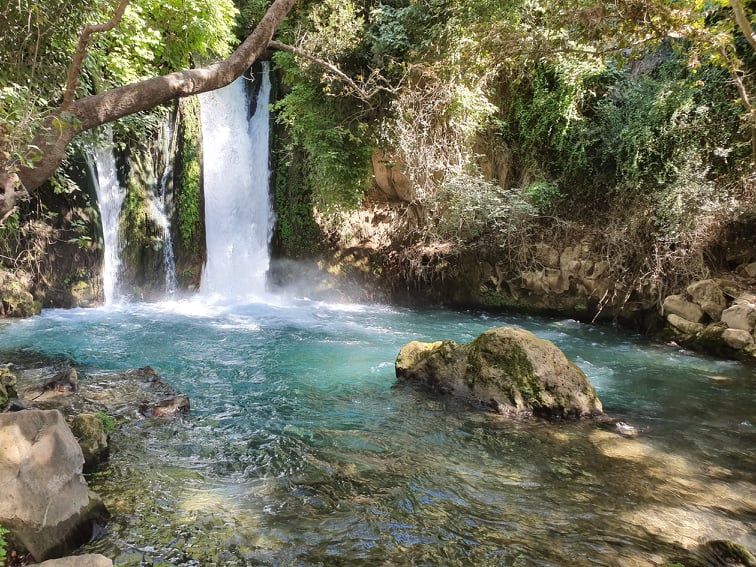
Located at the foot of Mount Hermon in the far north, the Banias Nature Reserve is home to Israel’s most powerful waterfall. An easy, shaded trail winds along the Hermon Stream through thick vegetation before arriving at the thundering falls. The area is also rich in history, with ruins of a Roman temple dedicated to the god Pan visible near the trailhead.

The Masada Snake Path

Rising early to climb the Snake Path up Masada and watch the sunrise over the Dead Sea is one of Israel’s most iconic experiences. The winding trail climbs roughly 400 meters to the ancient fortress where Jewish rebels made their last stand against Rome. The climb takes about 45 minutes to an hour, and arriving at the top as the first light paints the desert in gold is genuinely moving.

Israel’s trails offer far more than exercise. They connect you with the land’s history, geology, and natural beauty in ways that no bus tour can. For a guided hiking experience tailored to your fitness level and interests, Hoshen Tours can design the perfect itinerary to get you onto Israel’s most remarkable trails.

The Pilgrimage Road: Walking to the Temple, 2,000 Years Later

The Pilgrimage Road: Walking to the Temple, 2,000 Years Later

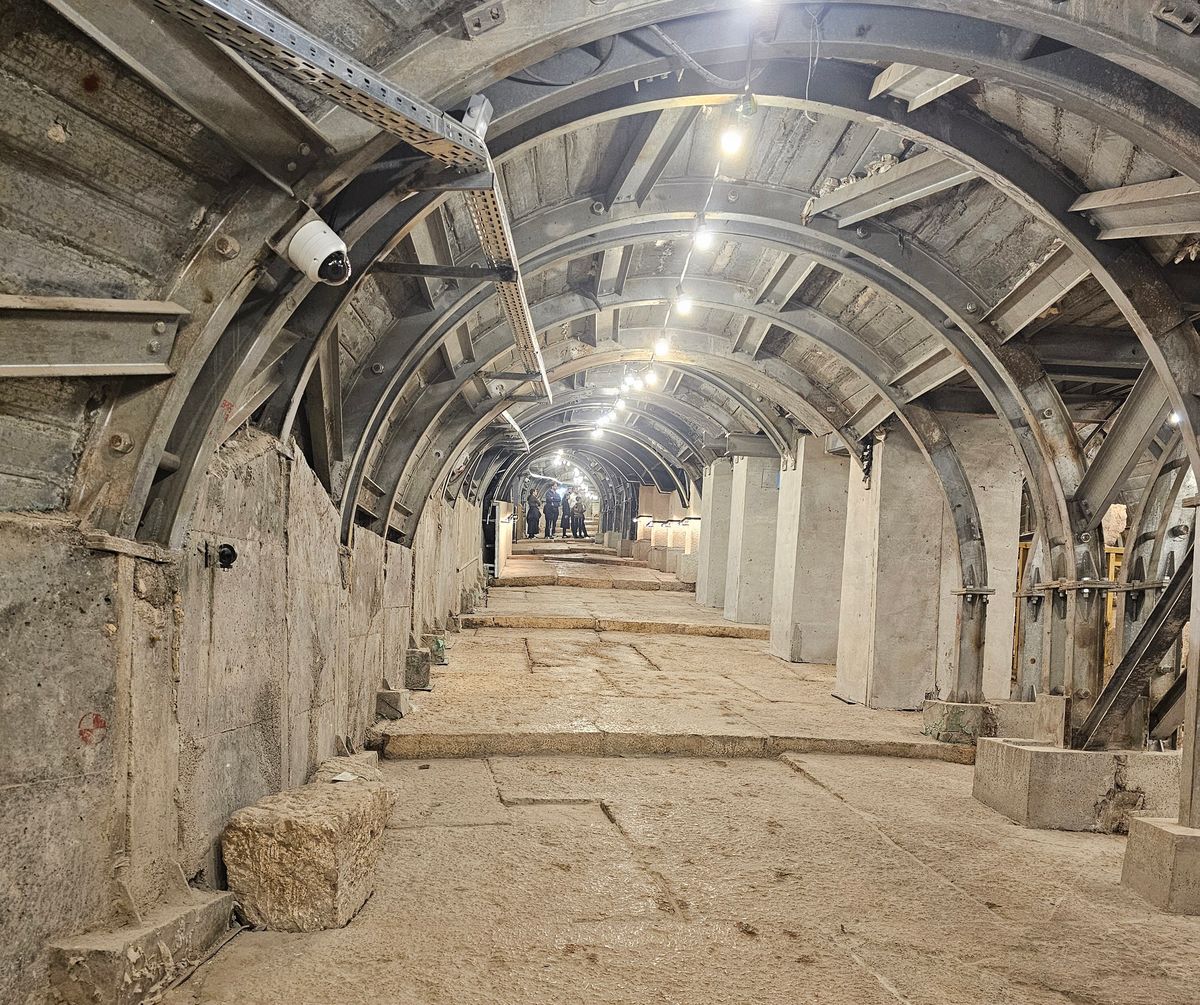
The Pilgrimage Road beneath the City of David, Jerusalem

For two thousand years, scholars and pilgrims have known that a monumental road once led from the Pool of Siloam at the southern end of the City of David up to the Temple Mount. Josephus described it. The Talmud referenced it. Coins and pottery fragments hinted at its existence beneath the modern streets of Jerusalem. But nobody had seen it. Until now.

The Pilgrimage Road, a 600-meter stone-paved street dating to the Second Temple period, was opened to the public on January 20, 2026, after 13 years of excavation, beneath the Arab neighborhood of Silwan, in the City of David. Walking it today, underground, lit by modern lighting but paved with stones that were laid during the time of Jesus, is one of the most extraordinary archaeological experiences available anywhere in the world.

The Road That Led to God

Three times a year, on the festivals of Passover, Shavuot, and Sukkot, Jewish law required every able-bodied man to make a pilgrimage to the Temple in Jerusalem. They came from across the Land of Israel, from the Galilee, from the coast, from the desert, converging on a city that swelled to many times its normal population during the festivals. And when they arrived, they followed a route.

The pilgrims would first immerse in a ritual bath (mikveh) to purify themselves. Many would descend to the Pool of Siloam, a large public pool at the lowest point of the city, fed by the waters of the Gihon Spring through Hezekiah’s Tunnel. From there, they would begin their ascent. The Pilgrimage Road, eight meters wide and paved with massive limestone slabs, climbed from the pool northward through the heart of the city, past shops and public buildings, up to the gates of the Temple Mount.

The road was not just a path. It was an experience. The width of the street, the quality of the paving, and the monumental stepped construction were designed to create a sense of ascending toward something sacred. With every step uphill, the pilgrim was moving closer to the presence of God.

What the Archaeologists Found

The excavation of the Pilgrimage Road, led by archaeologists from the Israel Antiquities Authority, has uncovered the street in remarkable condition. The limestone paving stones are still in place, worn smooth by centuries of foot traffic. Drainage channels run beneath the road, and the foundations of buildings that once lined the street are visible on both sides.

Among the most significant finds are hundreds of coins dating to the period just before the destruction of the Temple in 70 CE. Stone measuring weights used in commerce were found in what appear to have been shops along the road. Fragments of stone vessels, which were used by Jews who observed strict purity laws (stone, unlike pottery, does not become ritually impure), confirm the Jewish character of the street. And a Roman sword, still in its scabbard, was found in a drainage channel beneath the road, likely dropped or hidden during the chaos of the Roman destruction.

Walking Underground

The experience of walking the Pilgrimage Road is unlike any other archaeological site in Israel. The road runs beneath the modern streets of Silwan, and visitors descend through the City of David visitor center to reach the ancient street level. The tunnel is well-lit and ventilated, and the path follows the original road surface, climbing gradually from south to north.

As you walk, you pass the same stones that pilgrims walked on their way to the Temple. The scale of the road becomes apparent: this was not a narrow lane but a broad boulevard, built to handle the crowds of festival pilgrims. The shops and buildings along the sides, the drainage system below, and the stepped construction all speak to a city that was built for a purpose: bringing people to God.

The road ends near the Western Wall area, completing a journey that takes visitors from the lowest point of ancient Jerusalem to the foot of the Temple Mount. The emotional arc, from the purification pool at the bottom to the holy precinct at the top, mirrors the spiritual journey that the pilgrims themselves would have experienced.

The Pool of Siloam

The Pilgrimage Road begins at the Pool of Siloam, which has its own significance in both Jewish and Christian tradition. In the Second Temple period, the pool was a major public gathering place where pilgrims immersed before ascending to the Temple. In the Gospel of John (9:1-11), Jesus healed a blind man and told him to wash in the Pool of Siloam, after which his sight was restored.

The pool was rediscovered in 2004 during construction work and has been partially excavated. Its full dimensions are still being uncovered, but it is already clear that it was a monumental public pool, befitting its role as the starting point of the pilgrimage route.

The Latest Discoveries

The excavations continue to produce remarkable finds. For the first time, a structure from the Hasmonean period was discovered along the road, adding another layer to the sequence of civilizations that used this route. A rare coin was discovered by a young girl participating in the archaeological experience program, which scholars believe was extracted from the silver reserves kept in the Second Temple. And a specialized weighing table, used for commercial transactions along the road, confirms that the Pilgrimage Road was not just a ceremonial route but also a commercial thoroughfare, lined with shops and businesses that served the pilgrims.

The Siloam Dam

In 2025, archaeologists announced the discovery of a massive dam at the Pool of Siloam, the largest dam ever found in Israel and the earliest discovered in Jerusalem. The dam, approximately 12 meters high, 8 meters wide, and at least 21 meters long, was built between 805 and 795 BCE during the reigns of the biblical kings Joash or Amaziah of Judah (2 Kings 12, 14). The dating, determined by carbon-14 analysis of wood and plant remains in the mortar and published in the Proceedings of the National Academy of Sciences, is accurate to within a 10-year window.

The dam was built in response to a severe climate crisis: limited rainfall combined with sudden, intense storms. Together with a tower blocking the Gihon Spring and a channel feeding the Pool of Siloam, the dam formed a sophisticated hydraulic system designed to protect the growing city from both drought and flash floods. The discovery reveals that Jerusalem’s water engineering was far more advanced than previously understood, nearly a century before King Hezekiah built his famous tunnel (2 Kings 20:20).

Why It Matters

The Pilgrimage Road is more than an archaeological discovery. It is a physical confirmation of what ancient texts described: a city organized around the act of pilgrimage, designed to channel hundreds of thousands of people from every corner of the country toward a single point of worship. For Jews, it is a tangible connection to the Temple that was destroyed two thousand years ago. For Christians, it is the street that Jesus walked during his visits to Jerusalem. For everyone, it is a reminder that beneath the modern city, the ancient one is still there, waiting to be found.

The Inauguration

The Pilgrimage Road was officially inaugurated in September 2025 in a ceremony attended by Israeli Prime Minister Benjamin Netanyahu, US Secretary of State Marco Rubio, and US Ambassador to Israel Mike Huckabee. The public opening on January 20, 2026, made the road accessible to all visitors for the first time, completing a project that began in 2013 and is considered one of the most expensive and complex excavations currently taking place in Israel.

A Story Still Being Written

The excavations at the City of David and the Pool of Siloam are ongoing, and new discoveries emerge with every digging season. The information in this article reflects the state of research at the time of writing (May 2026). The archaeological picture continues to evolve, and what we know today will almost certainly be enriched by tomorrow’s findings. That is part of what makes this site extraordinary: the Pilgrimage Road is not a finished exhibit in a museum. It is a living excavation, and the story it tells grows deeper with every layer that is uncovered.

Visit with Hoshen Tours

The Pilgrimage Road is a centerpiece of Hoshen Tours’ Jerusalem itineraries. Our guides walk you through the excavation, connecting the stones beneath your feet to the texts that described them and the people who walked them. Because some roads lead not just to a destination, but back through time.

Israeli Innovation: How the Startup Nation Changed the World

Israeli Innovation: How the Startup Nation Changed the World

“Necessity is the mother of invention.” When Israel was established in 1948, it was a country with very limited natural resources. But there was one thing it was blessed with — people with extraordinary creativity. Today, more than 75 years later, Israel stands as the number one country in innovations per capita. Declared a “startup nation” with breakthroughs in science, technology, agriculture, medicine, and defense, Israel has transformed into a global hub of innovation that addresses key issues affecting life on our planet.

What Makes Israel So Innovative?

Several factors have driven Israel’s success in innovation:

  • The Israeli government allocates 4.1% of its budget to R&D — the second highest percentage in the world.
  • The education system produces one of the highest numbers of scientists and engineers per capita globally.
  • A culture of flexibility, creativity, and rapid problem-solving drives business performance.
  • Investment legislation offers reduced tax rates and grants for international companies operating in Israel.
  • Government incentive programs provide job grants for R&D centers, covering an average of 25% of payroll costs for new employees over four years.

Iron Dome

Developed by Rafael Advanced Defense Systems and funded largely by the United States, Iron Dome was born as a response to the 2006 Lebanon War, during which Hezbollah fired over 4,000 rockets at Israel. The system intercepts missiles launched from ranges of 4 to 70 km and operates day and night in all weather conditions. With a success rate of approximately 90%, Iron Dome is one of the most successful projects of the Israeli military industry.

Netafim — Drip Irrigation

Water scarcity was a critical challenge for Israeli farmers in a mostly arid climate. Engineer Simcha Blass changed agriculture forever when he observed two trees growing in the same environment — one significantly larger than the other. He noticed a dripping water pipe near the bigger tree and realized that small, consistent drops were enough to make it thrive. From this observation, Blass developed drip irrigation — a system of pipes with small holes that deliver water directly to plant roots. Netafim’s technology increased crop yields by 70% while reducing water usage by 50%. Today, it is used by farmers in over 110 countries.

Watergen — Drinking Water from Thin Air

Founded in 2009 by Arye Kochavi, Watergen creates drinking water from air. The devices extract humidity using patented technology, condensing water molecules and producing clean, safe drinking water. Selected as one of the ten most prominent Israeli technological inventions and named by Time Magazine as one of the 100 most innovative inventions in the world in 2019, Watergen addresses the global lack of clean water access.

Mobileye — Preventing Car Accidents

In 1999, Amnon Shashua and Ziv Aviram developed a tiny camera with unique algorithms that prevents car accidents. The Mobileye device provides real-time alerts about hazards, lane deviation, pedestrians, cyclists, and speed signs. It serves as an advanced driver-assistance system and the infrastructure for autonomous vehicles. In 2017, Intel acquired Mobileye for $15.3 billion, and dozens of car manufacturers worldwide now use the technology.

Water Desalination

To cope with chronic water shortages, Israel turned to desalination of Mediterranean seawater. The innovation has made Israel a global leader in water desalination — as of 2015, more than half of the country’s drinking water comes from desalinated sources. Israel currently operates multiple desalination plants along its coast, with additional facilities under construction.

Waze — Community-Based Navigation

A combination of the words “ways” and “maze,” Waze was developed by Ehud Shabtai after he grew frustrated with a GPS that could give directions but couldn’t provide real-time traffic information. Together with his colleagues, he created a community-based navigation system using crowdsourced data about traffic conditions, accidents, and roadwork. Waze now serves nearly 100 million users worldwide. Google acquired the company for $1.1 billion in 2013.

Checkpoint Software Technologies

Founded in 1993 by 25-year-old Gil Shwed and two friends in a small apartment in Ramat Gan, Checkpoint built the modern commercial firewall — offering computers worldwide protection from cyberspace dangers. Today, with approximately 100,000 users and 2,300 employees worldwide, the company is one of the world’s leading IT security providers.

More Groundbreaking Innovations

SniffPhone: A portable device that connects to a phone and can analyze breath to detect certain cancers, Parkinson’s disease, dementia, and multiple sclerosis — with 86-93% accuracy.

Nano Dimension: Established in 2012, this company developed 3D printers that allow electronics engineers to print entire circuit boards in hours — used across consumer products, medical equipment, security, aerospace, and automotive industries.

ReWalk: After a tragic accident left Dr. Amit Goffer paralyzed, he spent years designing an exoskeleton robot powered by a backpack battery that enables people with paraplegia to stand, walk, and even climb stairs. ReWalk gained worldwide recognition at the 2012 London Paralympics and 2014 London Marathon.

PillCam: Developed by scientist Gavriel Iddan, this digestible, disposable camera transmits images from inside the digestive tract. FDA-approved and now used worldwide, PillCam revolutionized the diagnosis of intestinal disorders and cancers. Iddan won the European Inventor Award in 2011.

BioBee: Founded in 1983 by Akiva Falk at Kibbutz Sde Eliyahu in the Jordan Valley, BioBee focuses on biological pest control — using bumblebees for pollination, friendly insects to attack harmful pests, and genetic modification to reduce pest reproduction. Today it is a multinational company, still headquartered at the kibbutz where it all began.

Where to See Innovation in Israel

Peres Center for Peace and Innovation: Founded in 1996 by former President Shimon Peres, this center in Jaffa features the Israeli Innovation Center — a fascinating immersive journey through the stories behind Israel’s greatest innovations.

Taglit Innovation Center: Located at the Tel Aviv Stock Exchange, this cutting-edge visitor center presents the Israeli startup ecosystem with interactive exhibitions and intimate sessions with Israeli entrepreneurs. Over 120,000 visitors have toured the center since 2016, including students, business delegations, and diplomats from around the world.

Israel’s innovation story is not just something you read about — it’s something you can experience firsthand. To include innovation-focused visits in your Israel itinerary, contact Hoshen Tours.

Beneath the Church: What Science Found at the Tomb of Jesus

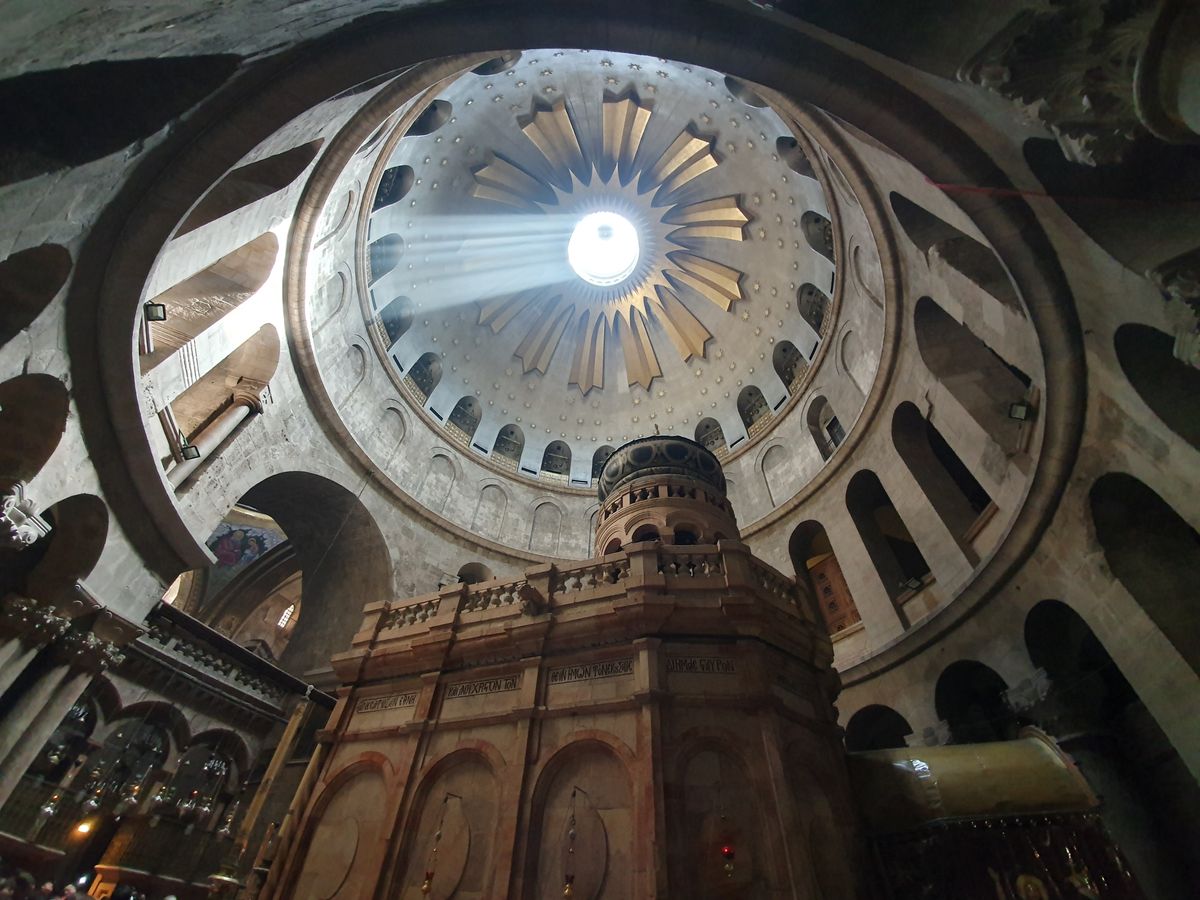
Church of the Holy Sepulchre, Jerusalem

In October 2016, for the first time in centuries, the marble slab covering the traditional burial place of Jesus Christ was pulled back. In 2025, archaeologists announced they had found traces of an ancient garden beneath the church floor, with olive trees and grapevines growing where the Gospels said they would. Two scientific investigations, nine years apart, and between them a story of stone, soil, and the slow, patient work of understanding the most sacred site in Christianity.

Opening the Tomb: October 2016

The marble slab covering the burial bed inside the Edicule, the small shrine at the heart of the Church of the Holy Sepulchre, had not been moved since at least 1555. Some believed it had not been disturbed since the Crusader period. Beneath the marble, no one knew for certain what remained of the original rock-cut tomb.

In 2016, with the agreement of the three major religious communities that hold primary custodial rights in the church (the Greek Orthodox, the Roman Catholics, and the Armenian Apostolic, who share the space alongside three smaller communities: the Copts, the Ethiopians, and the Syriac Orthodox), a team from the National Technical University of Athens, led by Professor Antonia Moropoulou, began a $4 million restoration of the Edicule. The project was documented by National Geographic, and when the moment came to lift the marble slab, the world was watching.

“The marble covering of the tomb has been pulled back, and we were surprised by the amount of fill material beneath it,” said Fredrik Hiebert, archaeologist-in-residence at the National Geographic Society. Beneath layers of fill, the team found a second, broken grey marble slab with a small cross etched into its surface, believed to date to the 12th century and likely placed there by Crusaders. And beneath that, after 60 continuous hours of work, they reached the original limestone burial bed. It was intact.

The grey-beige limestone surface, roughly 3 by 5 feet, was the rock on which, according to Christian tradition, the body of Jesus was laid after the crucifixion: “Joseph took the body, wrapped it in a clean linen cloth, and placed it in his own new tomb that he had cut out of the rock” (Matthew 27:59-60). For the first time in centuries, that rock was visible.

The Dating: 345 CE

The restoration team took mortar samples from between the original limestone surface and the marble slab that covered it. Two independent laboratories, the Laboratory of Materials Science at the National Technical University of Athens and the Laboratory of Archaeometry at the University of the Peloponnese, analyzed the samples using optically stimulated luminescence (OSL), a technique that determines when quartz sediment was most recently exposed to light.

The result: the mortar was dated to approximately 345 CE.

The significance of this date is hard to overstate. Historical records tell us that the Roman Emperor Constantine’s mother, Helena, traveled to Jerusalem around 326 CE and identified the site of the crucifixion and burial. Constantine ordered the pagan temple that the Emperor Hadrian had built over the site demolished and a grand church constructed in its place. The Martyrium, the original Church of the Holy Sepulchre, was dedicated in 335 CE.

The mortar date of 345 CE falls squarely within the Constantinian period. It means that the marble slab was placed over the burial bed within a decade or two of the church’s construction, and that the tomb identified by Helena in 326 CE is the same tomb that pilgrims visit today. Before this test, the earliest physical evidence at the tomb dated to the Crusader period, over a thousand years later. The mortar dating pushed the confirmed history of the site back by seven centuries, connecting the modern church directly to the decisions of Rome’s first Christian emperor.

The Garden: 2025

Nine years after the tomb was opened, a different team made a different kind of discovery. Professor Francesca Romana Stasolla of Sapienza University in Rome had been leading excavations beneath the church floor since 2022, with permission from all three religious communities. It was the most extensive archaeological excavation at the Church of the Holy Sepulchre in nearly 200 years.

What Stasolla’s team found was not a tomb or a relic. It was dirt. Specifically, it was soil that had been cultivated approximately 2,000 years ago, with traces of olive trees and grapevines identified through archaeobotanical and pollen analysis. Low stone walls separated garden plots, demonstrating a deliberate agricultural layout. The site, the team established, had progressed through a clear sequence: it was first a quarry (dating back to the Iron Age, 1200-586 BCE), then transformed into cultivated fields, and finally became a burial ground by the 1st century CE.

“The archaeobotanical findings have been especially interesting for us,” said Professor Stasolla, “in light of what is mentioned in the Gospel of John.”

What the Gospel of John says is this: “At the place where Jesus was crucified, there was a garden, and in the garden a new tomb in which no one had yet been laid” (John 19:41).

A garden. With a new tomb in it. That is exactly what the archaeology now shows: cultivated soil with olive trees and grapevines, transitioning to a burial area, in the 1st century CE, at the precise location where the Church of the Holy Sepulchre stands.

What It Means

Archaeology does not prove theology. The mortar date of 345 CE does not prove that Jesus rose from the dead. The garden soil does not prove that the crucifixion happened at this specific spot. What they do is something more modest and, in its own way, more remarkable: they confirm that the Church of the Holy Sepulchre stands on a site that was identified as the place of the crucifixion and burial within living memory of the events themselves, and that the physical description in the Gospels, a garden with a tomb, outside the city walls, near the place of execution, matches what the ground actually looked like 2,000 years ago.

The site was a quarry that became a garden that became a graveyard. The Gospel of John, written in the late 1st century CE, described it as a garden with a new tomb. And the archaeology, conducted with 21st-century scientific methods, confirms that description with soil samples, pollen, and stone walls.

For believers, this is confirmation. For skeptics, it is evidence that needs to be weighed. For everyone, it is a reminder that the ground beneath one of the most visited buildings in the world still has secrets to reveal, and that sometimes the most important discoveries are not gold or jewels but ordinary soil that once grew olive trees.

The Circular Base

Among the other finds, Stasolla’s team uncovered a circular marble base beneath the Edicule shrine that may be part of Constantine’s original 4th-century structure. Early 5th and 6th century depictions of the church show a circular monument at the tomb, and the newly discovered base may correspond to these descriptions. Further testing is underway to determine the marble’s origin and confirm the identification.

Visiting the Church of the Holy Sepulchre

The Church of the Holy Sepulchre is the holiest site in Christianity and one of the most complex buildings in Jerusalem. Six denominations share the church under a fragile arrangement called the Status Quo, and the key to the front door has been held by a Muslim family since the time of Saladin. Walking through the church without a guide can be overwhelming. Walking through it with a guide who understands both the archaeology and the faith transforms the experience.

Hoshen Tours designs Jerusalem itineraries that include the Church of the Holy Sepulchre as a centerpiece, connecting the Edicule, the Golgotha chapel, the Stone of Unction, and the hidden chapels into a journey through the death, burial, and resurrection story. Because this church was built on a garden, and the garden was built on a quarry, and beneath it all is the rock that has drawn pilgrims for seventeen centuries.

The excavations at the Church of the Holy Sepulchre are ongoing, and the findings described in this article reflect the state of research as of May 2026. New discoveries may emerge as the work continues.

Is Israel Safe to Visit? What You Need to Know

Is Israel Safe to Visit? What You Need to Know

Is Israel Safe to Visit? Yes, Millions Visit Safely Every Year

Wondering whether Israel is safe to visit? Israel welcomes millions of tourists annually, and the vast majority have safe, smooth, and deeply memorable trips. The country has one of the most developed tourism infrastructures in the world, with well-maintained roads, modern hospitals, English widely spoken, and a hospitality industry that knows how to take care of visitors. Still, it’s natural to have questions—and this guide is here to answer them honestly.

What the News Doesn’t Show You

Media coverage of Israel tends to focus on conflict, which can create a skewed picture. The reality on the ground in the main tourism areas is often very different from what headlines suggest. Cities like Tel Aviv, Jerusalem, Haifa, and the Sea of Galilee region are bustling with tourists, families, and everyday life. Restaurants are full, markets are crowded, and people go about their days as they would in any modern, developed country.

Israel has a highly effective security apparatus that works largely behind the scenes. You’ll notice security checks at malls, bus stations, and public venues—but rather than being alarming, most visitors find this reassuring. The country takes the safety of its residents and visitors extremely seriously.

Tourism Infrastructure You Can Count On

Israel’s tourism infrastructure is genuinely world-class. Ben Gurion International Airport is consistently ranked among the safest and most efficient airports globally. The road network is excellent, with well-signed highways connecting all major destinations. Emergency services are highly responsive, and hospitals meet international standards.

For visitors, this means your practical experience—getting from the airport to your hotel, traveling between Masada and the Dead Sea, navigating the Old City of Jerusalem—is smooth and well-supported.

Areas to Be Aware Of

Like any destination, some areas require more awareness than others. Most governments advise travelers to check current travel advisories before visiting, and your guide or tour operator can provide up-to-date information about which areas are fully accessible. The main tourist routes—Jerusalem, Tel Aviv, the Galilee, the Dead Sea, the Negev, and the Mediterranean coast—are well-traveled and well-protected.

Border areas (particularly near Gaza and parts of the northern border) may have restrictions depending on the current situation. A knowledgeable local guide will always steer you toward the safest routes and adjust itineraries in real time if anything changes.

The Value of a Local Guide

One of the best safety decisions you can make is traveling with a licensed Israeli guide who knows the country intimately. At Hoshen Tours, our guides live here. They read the local news, understand the cultural landscape, and know which roads to take and which neighborhoods to visit on any given day. This isn’t about fear—it’s about having someone on the ground who can make your trip both safer and richer.

A private guided tour also means you’re never navigating unfamiliar areas alone. Your guide handles all the logistics, from parking and entry points to cultural norms and tipping etiquette, leaving you free to focus on the experience.

Practical Safety Tips for Visitors

  • Travel insurance: Always purchase comprehensive travel insurance that covers medical emergencies and trip interruption. This is good advice for any international trip, not specific to Israel.
  • Stay hydrated: The climate can be intense, especially in summer. Carry water, wear a hat, and take breaks in the shade—the sun is often a bigger concern than anything else.
  • Register with your embassy: Many countries offer a travel registration service that helps them reach you in case of emergency.
  • Keep your phone charged: Have your guide’s number, your hotel’s address, and your country’s local embassy number easily accessible.
  • Respect local customs: Dress modestly at religious sites (Western Wall, Church of the Holy Sepulchre, mosques). This is a sign of respect and also avoids unwanted attention.
  • Follow your guide’s advice: If your guide suggests a route change or timing adjustment, trust their judgment.

What Past Visitors Say

The overwhelming majority of travelers to Israel report feeling safe throughout their trip. Many say they felt safer than expected, and most come away saying they wish they’d visited sooner. The warmth of the people, the depth of the history, and the beauty of the landscapes tend to overshadow whatever apprehension visitors arrived with.

Ready to See Israel for Yourself?

The best way to experience Israel safely and meaningfully is with a guide who knows the land inside and out. We’d love to help you plan a trip that puts your mind at ease and opens your eyes.

Tell us about your trip → | Contact us with any questions