Call Hoshen Tours

Call us today!

+1-917-9055850

Contact Hoshen Tours on WhatsApp

Israel’s Missile Defense Systems: How a Small Country Built the World’s Most Advanced Air Defense

Born from War

In the summer of 2006, the Second Lebanon War exposed a critical vulnerability in Israel’s defences. Over 34 days of fighting, Hezbollah fired approximately 4,000 rockets into northern Israel — more than 100 per day — killing 53 Israeli civilians and displacing hundreds of thousands.

The war ended with a clear conclusion: Israel needed a fundamentally new approach to missile defence. What followed was one of the most ambitious defense development programs in modern military history.

Iron Dome — The Shield That Changed Everything

In February 2007, just months after the Lebanon War ended, Israeli Defence Minister Amir Peretz authorized Rafael Advanced Defence Systems to begin developing a short-range rocket defence system. The initial budget was approximately $100 million.

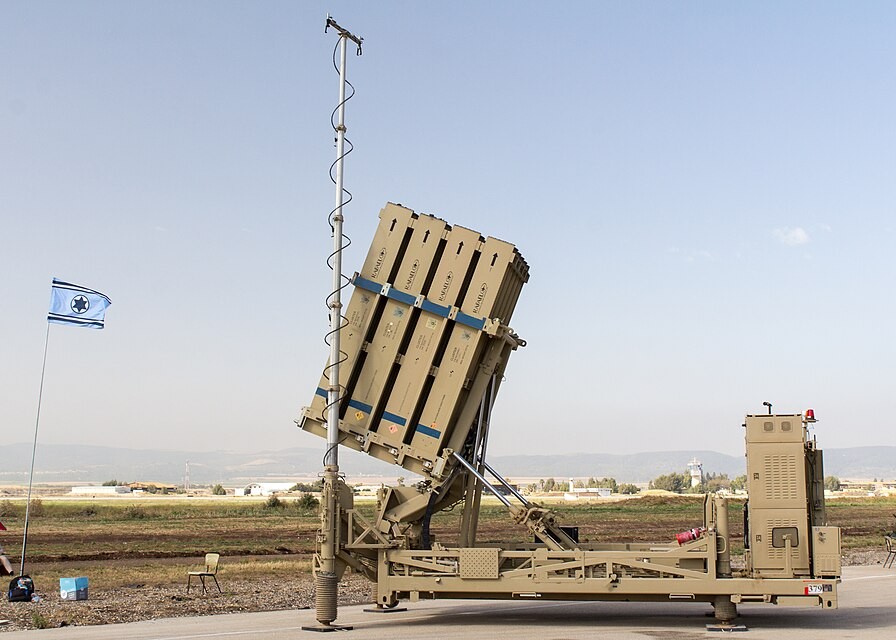
The system, named Iron Dome, was designed to intercept short-range rockets and mortar shells with a range of 4 to 70 kilometres. Each Iron Dome battery uses radar to detect incoming rockets, a command-and-control system to calculate whether the rocket will hit a populated area, and Tamir interceptor missiles to destroy threats mid-air.

By March 2011, just four years after development began, Iron Dome was declared operational. Since then, it has intercepted thousands of rockets with a reported success rate of approximately 90%.

Cost per interception: Each Tamir interceptor missile costs an estimated $50,000–$150,000.

David’s Sling — The Middle Layer

David’s Sling (also known as Magic Wand) was developed jointly by Rafael and Raytheon, and was declared operational in 2017. It is designed to intercept threats at ranges of 40 to 300 kilometres, filling the gap between Iron Dome and the Arrow system. It uses the Stunner interceptor, which employs advanced hit-to-kill technology.

Cost per interception: Approximately $1–2 million per Stunner interceptor.

Arrow 2 and Arrow 3 — Defence Against Ballistic Missiles

The Arrow program is Israel’s answer to long-range ballistic missiles — the kind that could be launched from Iran. Developed jointly by Israel Aerospace Industries (IAI) and Boeing:

Arrow 2, operational since 2000, intercepts ballistic missiles within the atmosphere during their descent phase.

Arrow 3, operational since 2017, intercepts ballistic missiles in space. In November 2023, Arrow 3 made history when it successfully intercepted a ballistic missile in space during actual combat for the first time.

Cost per interception: Arrow 2 ~$3 million; Arrow 3 ~$4 million.

Iron Beam — The Future Is Here

The game-changing advantage of Iron Beam is cost. While a single Iron Dome interceptor costs $50,000–$150,000, an Iron Beam interception costs approximately $2,000 — potentially hundreds of times cheaper than traditional missile-based systems.

A Multi-Layered Shield

System Range Targets Cost
Iron Beam Short range Rockets, mortars, drones ~$2,000
Iron Dome 4–70 km Short-range rockets $50K–$150K
David’s Sling 40–300 km Medium-range missiles $1–2M
Arrow 2 Long range Ballistic missiles ~$3M
Arrow 3 Space Ballistic missiles, ICBMs ~$4M

Each layer handles specific threats at specific altitudes, creating overlapping zones of protection.

A Living Reality

For visitors to Israel, the missile defense systems are not abstract military technology — they are a visible part of daily life. Iron Dome batteries can be spotted on hilltops across the country. What began as a desperate response to the devastating rocket attacks of 2006 has evolved into a technological achievement that has fundamentally changed the nature of modern warfare.

The Spirit of Israel: Where They Tried to Destroy, We Build Again

The Spirit of Israel: Where They Tried to Destroy, We Build Again

A Story That Goes Far Beyond October 7th

There is something about the Jewish people that history has never managed to explain — and certainly never managed to break. Time and again, across centuries and continents, when darkness tried to extinguish the light, the light came back brighter. Not because the pain wasn’t real. But because something deep in the soul of this people refuses to let destruction have the final word.

The communities of Israel’s Gaza border region — the kibbutzim, moshavim, and small towns known as the Otef Aza — are living proof of this truth. What happened here on October 7th, 2023 was one of the darkest days in Israel’s history. But what is happening here now, just over two years later, is one of its most inspiring chapters.

Who Are the People of the Gaza Border?

The communities of the Gaza envelope are among the oldest and most pioneering in Israel. Some were established in a single night in 1946 — eleven settlements planted across the Negev desert in what became known as the 11 Points in the Negev — a bold move to establish a Jewish presence before the United Nations Partition Plan. Kibbutz Nirim, Be’eri, Kfar Aza — these communities were born from the most fundamental Zionist dream: to settle the land and make the desert bloom.

And bloom it did. Over the decades, the Gaza border region became one of Israel’s most productive agricultural zones — fields of avocado, citrus orchards, cutting-edge greenhouse technology, and thriving dairy farms stretching across the western Negev. Thousands of families built their lives here, raised their children here, and created communities rooted in values of cooperation, equality, and a deep connection to the land.

These are people who chose to live on the edge — literally — because they believed in building something meaningful in Israel’s frontier. Many of them were peace activists. Many employed Palestinian workers from Gaza and drove sick Palestinians to Israeli hospitals. They were, in many ways, the Israelis who believed most deeply in the possibility of coexistence.

October 7th — The Day That Changed Everything

On the morning of October 7th, 2023, thousands of terrorists breached the border and attacked more than 20 communities simultaneously. The details are well known and deeply painful. Approximately 1,200 people were murdered, over 250 were taken hostage, and entire communities were destroyed.

But this article is not about what happened on that day. It is about what happened after.

Rising from the Ashes

In the weeks following the attack, as families mourned and communities lay in ruins, something remarkable began to happen. People started talking about going back. Not fleeing to safer cities. Not giving up. Going back.

At first it was just a whisper — a few families saying they refused to let terrorists decide where they would live. Then it became a movement. And today, the numbers tell an extraordinary story:

  • 42 out of 47 Gaza border communities have seen over 90% of their residents return home
  • 2,500 new residents have moved into the region — including into communities that suffered the heaviest attacks
  • Over 3,000 new residents have moved to the city of Sderot alone
  • The Israeli government has committed 19 billion shekels (approximately $5.75 billion) to the rehabilitation and development of the region
  • The national plan aims to double the population of the Gaza border area to 120,000 residents by 2033

Building Something New

Across the region, construction cranes fill the skyline. New homes are being built. New neighborhoods are being planned. And in several cases, communities are emerging stronger and more united than they were before.

Kibbutz Kissufim, which was heavily attacked, is building 20 new residential units and has already reopened a kindergarten for the children who have returned. Kfar Aza, where 64 people were murdered, is constructing a brand-new Young Generation neighborhood with 48 housing units for young families.

In an unprecedented move, Kfar Aza, Sa’ad, and Mefalsim have joined forces to create a shared agricultural partnership — combining their orchards, vegetable fields, and grain crops into a single cooperative operation. Three kibbutzim, each of which endured its own nightmare, choosing to build their future together.

The Spirit That Cannot Be Broken

To understand what is happening in the Gaza border communities, you must understand something deeper about the Jewish people and about Israel. This is a nation that was born in the desert. A people that returned to their homeland after 2,000 years of exile, drained the swamps, planted forests, and built cities from sand.

Israeli society is famously divided — politically, culturally, religiously. Israelis argue about everything, loudly and passionately. But when it matters most, when the moment demands it, this divided society comes together with a unity that defies explanation. October 7th proved it once again. Thousands of civilians drove south on their own, armed with whatever they had, to rescue strangers.

A Message to the World

The communities of the Gaza border are sending a message that echoes far beyond Israel’s borders. It is the same message that the Jewish people have been sending for thousands of years:

Where you tried to destroy us, we will build. Where you tried to silence us, we will sing. Where you tried to end our story, we will write a new chapter.

The kibbutzim of the Gaza border were founded by dreamers — young pioneers who believed they could make the desert bloom. Today, a new generation of dreamers is arriving. Young families who are choosing to raise their children in Be’eri, in Kfar Aza, in Kissufim. Not because they don’t know what happened there. But because they believe in what can happen next.

Come and See

For visitors to Israel, the Gaza border region is no longer just a place on the map. It is a living testament to the human spirit — a place where the worst of humanity was met with the best of it. Where destruction gave way to determination. Where grief gave way to growth.

The fields are green again. The orchards are bearing fruit. Children are playing in new playgrounds built on the grounds where their parents’ homes once stood. And in the evenings, if you listen carefully, you might hear music drifting across the Negev — because the people of the Gaza border have not stopped dancing.

They never will.

Best Time to Visit Israel: A Month-by-Month Guide

Best Time to Visit Israel: A Month-by-Month Guide

Why Timing Matters for Your Israel Trip

Choosing the best time to visit Israel can make or break your trip. Israel is a destination that rewards visitors year-round, but the experience shifts dramatically depending on when you arrive. A week in April feels nothing like a week in August, and not just because of the weather. Religious holidays transform entire cities, seasonal prices swing wildly, and the landscapes themselves change color with the months. Whether you’re walking the streets of Jerusalem, floating in the Dead Sea, or exploring the alleyways of Tel Aviv-Jaffa, this guide will help you pick the perfect window for your visit.

Spring (March – May): The Sweet Spot

If you’re looking for the single best time to visit Israel, most travelers and locals will point you toward spring. Temperatures are warm but comfortable—typically 18–28°C (65–82°F)—and the country is still green from winter rains. Wildflowers carpet the hillsides of the Galilee and the Negev, making it a spectacular time for hiking.

Spring is also the season of Passover and Easter, which brings a special energy to Jerusalem’s Old City. Pilgrims and visitors fill the Church of the Holy Sepulchre and the Western Wall for prayers and celebrations. The Via Dolorosa processions during Holy Week are unforgettable. Keep in mind that hotels fill up quickly during these holidays, so book well in advance. Note that Passover is one of the most expensive periods to visit Israel — hotels and flights are at peak pricing, and many Jerusalem and Tel Aviv hotels require minimum stays of 5–7 nights.

April and May offer ideal conditions for sites like Masada before the punishing summer heat arrives. The Sea of Galilee is gorgeous in spring, with calm waters and blooming surroundings.

Summer (June – August): Sun, Sea, and Long Days

Israeli summers are hot—there’s no way around it. In Jerusalem, temperatures hover around 30°C (86°F), while the Dead Sea and Eilat can easily push past 40°C (104°F). But summer has its own appeal. The days are long (sunrise before 6 AM, sunset after 8 PM), the skies are cloudless, and the Mediterranean coast is at its best.

Tel Aviv comes alive in summer with beach culture, outdoor restaurants, and a vibrant nightlife. The Carmel Market overflows with summer fruits—mangoes, figs, and sabra cactus fruit. If you can handle the heat, summer is also a great time for Mediterranean coast towns like Caesarea and Akko.

Pro tip: plan desert excursions for early morning and save indoor museums like the Israel Museum and Yad Vashem for the hottest part of the day. Summer is also peak season, so expect higher hotel prices—but fewer European and American tour groups than spring.

Fall (September – November): Holidays and Harvest

Fall begins with a bang in Israel. The Jewish High Holidays—Rosh Hashanah, Yom Kippur, and Sukkot—fall between September and October, and they fundamentally change the rhythm of the country. On Yom Kippur, the entire nation pauses: no cars on the roads, no businesses open. It’s an extraordinary experience even for non-Jewish visitors.

Important note on pricing: During the Jewish holidays (Rosh Hashanah, Sukkot, and Passover), flight prices and hotel rates rise dramatically. Hotels in Jerusalem and Tel Aviv often require a minimum stay of 5 to 7 nights during these peak periods, and rates can be two to three times higher than the regular season. If you are planning a trip during the holidays, book well in advance and expect significantly higher costs. Your Hoshen Tours guide can help you navigate the best options and find availability even during the busiest weeks.

Jewish holidays are not the only ones that affect travel in Israel. Ramadan, the Muslim month of fasting, shifts the rhythm of daily life in Arab cities and the Old City of Jerusalem — many restaurants and shops in Muslim areas close during daylight hours, and the atmosphere changes significantly, especially in the evenings when the fast breaks and the streets come alive. The dates of Ramadan move each year according to the Islamic lunar calendar. Christian holidays — particularly Christmas and Easter — bring large numbers of pilgrims to Bethlehem, Nazareth, and Jerusalem’s Old City. Hotel prices in these areas rise during Easter week, and the Church of the Holy Sepulchre and Via Dolorosa can be extremely crowded. Planning around these dates — or embracing them as part of the experience — is something your Hoshen Tours guide can help you navigate.

Sukkot (the Feast of Tabernacles) is one of the most joyful holidays, with decorated booths appearing on balconies across the country and special celebrations at the Western Wall. The weather cools gradually through October and November, returning to that comfortable 20–25°C range. By late October, the summer crowds have thinned, and you’ll find better deals on accommodation.

November is an underrated gem. The Golan Heights takes on autumn colors, the hiking trails in the Upper Galilee are uncrowded, and the first rains bring a freshness to the air. It’s a wonderful time for exploring Safed and the mystical north.

Winter (December – February): Cool, Green, and Surprisingly Rewarding

Winter in Israel isn’t what most people expect. While Jerusalem can get chilly (5–12°C / 41–54°F) and even sees occasional snow, Tel Aviv stays mild and the Dead Sea region remains warm enough for a float. The landscape transforms into lush green, a stark contrast to the dry summer months.

Christmas in Bethlehem is a once-in-a-lifetime experience for many visitors. Midnight Mass at the Church of the Nativity, walking through Manger Square, and visiting the Shepherds’ Fields during the actual holiday season adds a powerful layer of meaning. January and February bring the lowest prices of the year and the thinnest crowds—perfect for travelers who prefer a quieter experience.

Winter is also prime time for birdwatching in the Hula Valley, where hundreds of thousands of cranes and other migratory birds stop over on their journey between Europe and Africa.

Quick Season Comparison

Best weather: March–May, October–November
Lowest prices: January–February
Best for holidays: March–April (Passover/Easter), September–October (Jewish High Holidays), December (Christmas)
Best for beaches: June–September
Fewest crowds: November–February (except Christmas week)

The Bottom Line: Best Time to Visit Israel

There truly is no bad time to visit Israel—only different experiences. A private guided tour lets you make the most of any season, with an itinerary tailored to the weather, the holidays, and what matters most to you. Whether you’re drawn by the wildflowers of spring, the warmth of summer beaches, the spirituality of fall holidays, or the quiet beauty of winter, Israel has something waiting for you.

Explore Our Tour Collection

Ready to plan your trip? Browse our most popular tour options:

  • Private Tours of Israel – Fully customized to your dates and interests
  • Holy Land Pilgrimage Tours – Walk where faith began
  • Christian Tours of Israel – Follow the footsteps through the Gospels
  • Jewish Heritage Tours – Connect with 4,000 years of history
  • Israel Family Tours – Adventures for every generation
  • Holy Land Tour Packages – Complete packages for every budget

Start planning your Israel trip today →

What to Pack for Your Israeli Trip

What to Pack for Your Israeli Trip

Packing for Israel can feel tricky. The country spans deserts, mountains, coastline, and ancient cities, all within a remarkably compact area. Whether you are visiting for a week or a month, having the right gear in your suitcase will make your experience far more comfortable. Here is a practical, season-by-season guide to help you pack smart.

Dress in Layers for Every Season

Israel enjoys a Mediterranean climate along the coast, but temperatures can vary dramatically depending on where you go. Summers (June through September) are hot and dry, with temperatures regularly exceeding 35 degrees Celsius in the south. Lightweight, breathable fabrics like cotton and linen are essential. In winter (December through February), rain is common in the north and central regions, and Jerusalem can even see snow. Pack a warm fleece or jacket and a compact rain shell. Spring and autumn are the most pleasant seasons, but mornings and evenings can be cool, so layers are your best friend.

Comfortable Shoes Are Non-Negotiable

You will be walking a lot in Israel. From the cobblestone streets of Jerusalem’s Old City to the rugged trails of the Negev Desert, sturdy and comfortable walking shoes are absolutely essential. Bring a pair of broken-in hiking shoes or sneakers for daily exploring, and consider packing sandals with good arch support for beach days and casual evenings. Avoid brand-new shoes that haven’t been worn in yet.

Sun Protection All Year Round

The Israeli sun is strong, even in winter. Pack the following sun essentials:

  • High-SPF sunscreen (at least SPF 50, reapply frequently)
  • A wide-brimmed hat or cap to shield your face and neck
  • Quality sunglasses with UV protection
  • A refillable water bottle to stay hydrated throughout the day

Modest Dress for Holy Sites

Israel is home to sacred sites for Judaism, Christianity, and Islam. When visiting places like the Western Wall, the Church of the Holy Sepulchre, or mosques, modest dress is required. For both men and women, this means covering shoulders and knees. Women should carry a light scarf or shawl that can double as a cover-up. Men may need a head covering at certain Jewish sites, though these are often provided at the entrance.

Electronics and Adapters

Israel uses Type H electrical outlets with a voltage of 220V. Most modern phone and laptop chargers handle dual voltage, but check yours before traveling. Bring a universal adapter or one specifically for Israel’s three-pronged plugs. A portable power bank is also highly recommended for long days of sightseeing.

Medications and Documents

Bring all prescription medications in their original packaging, along with a copy of your prescriptions. A basic travel medical kit with pain relievers, antihistamines, and stomach remedies is always wise. Keep copies of your passport, travel insurance, and itinerary both in print and saved digitally. Israel requires a passport valid for at least six months beyond your travel dates.

A Few Extra Tips

Pack a small daypack for daily excursions, swimwear for the Mediterranean and Dead Sea, and a quick-dry towel if you plan on hiking. Leave room in your luggage for souvenirs, because you will find plenty worth bringing home.

Proper packing sets the tone for a stress-free trip. If you would like personalized advice based on your specific itinerary, the team at Hoshen Tours is happy to help you prepare for every detail of your Israeli adventure.

The Prophet Isaiah: His Prophecies, the Great Isaiah Scroll, and Where to See It

The Prophet Isaiah: His Prophecies, the Great Isaiah Scroll, and Where to See It in Israel

If you have ever heard the phrase “beating swords into plowshares,” you have already encountered the words attributed to the Prophet Isaiah. Nearly three thousand years later, his vision of a world without war still moves people. And remarkably, you can stand just a few feet away from his words — written on ancient parchment — at the Israel Museum in Jerusalem.

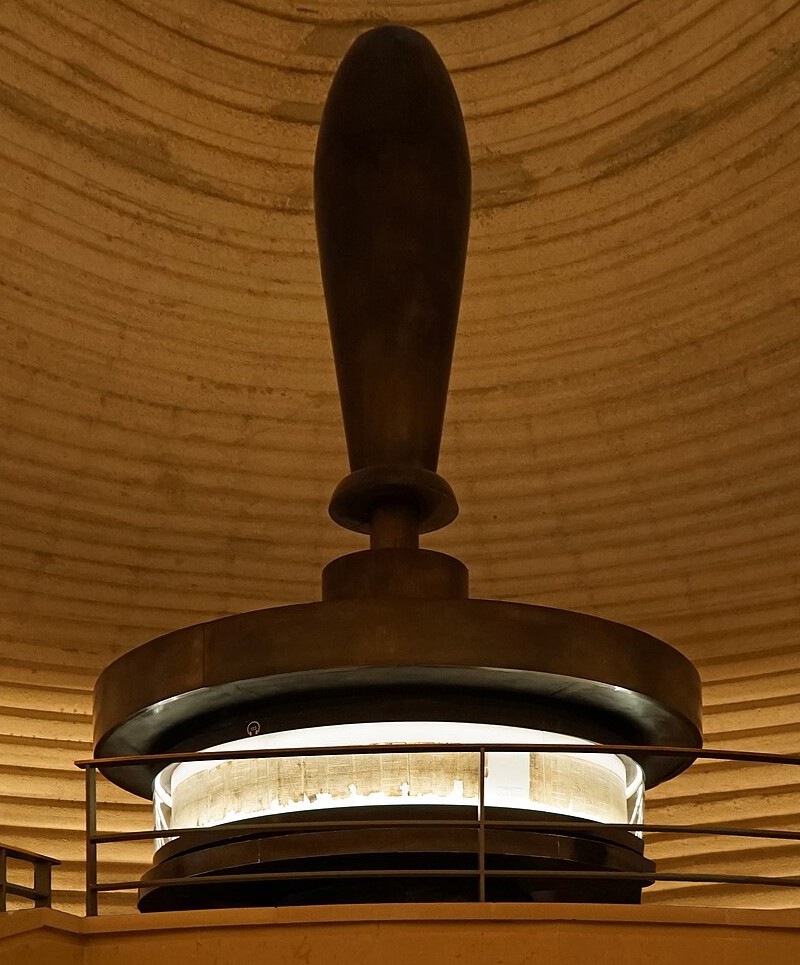
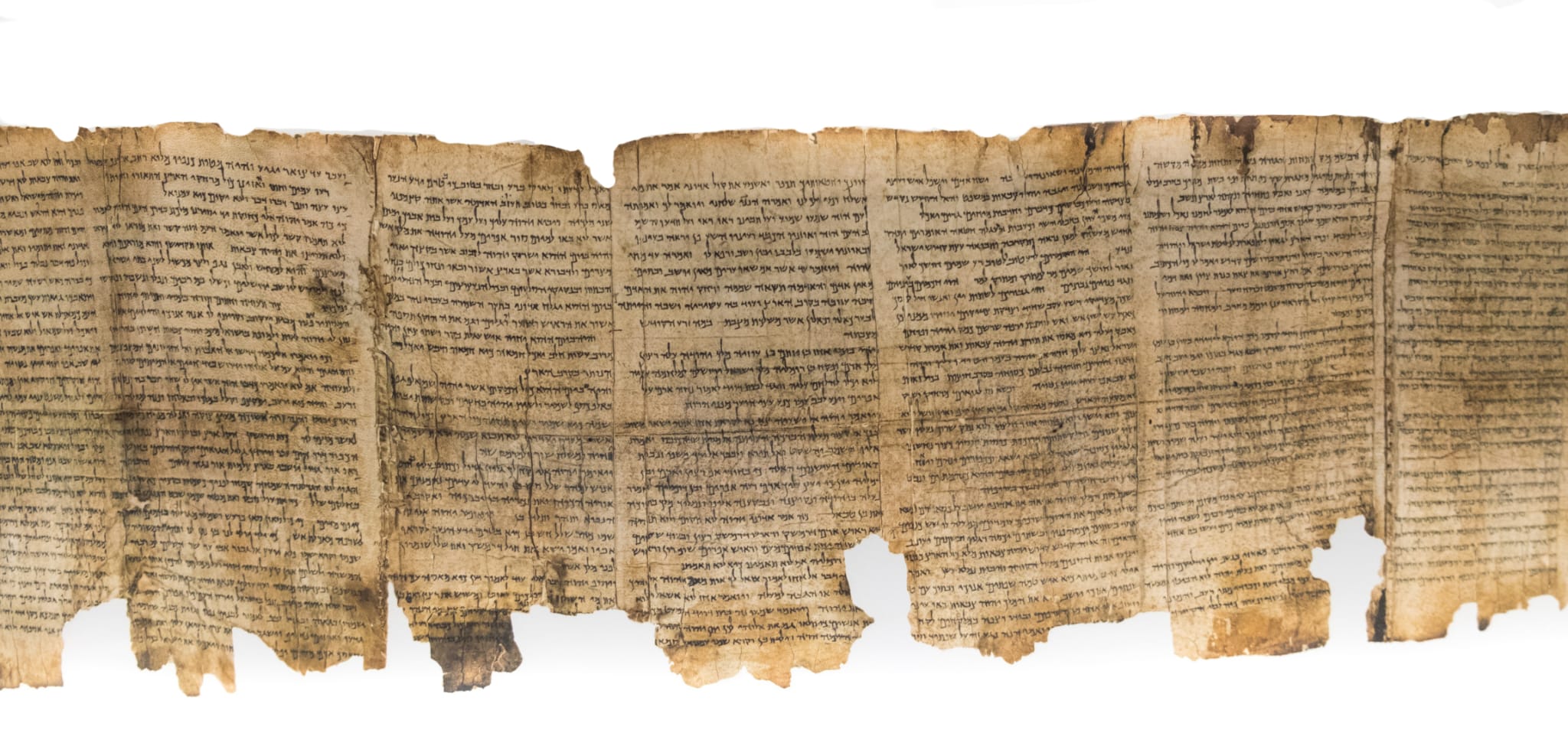
The Great Isaiah Scroll displayed at the Shrine of the Book, Israel Museum, Jerusalem

Who Was Isaiah?

Isaiah (in Hebrew, Yeshayahu, meaning “God is salvation”) is described in the biblical text as a prophet who lived in Jerusalem during the 8th century BCE — roughly 2,700 years ago. According to the Book of Isaiah, he was active during the reigns of four kings of Judah (Isaiah 1:1), placing his career between approximately 740 and 700 BCE. This was one of the most turbulent periods in the history of the ancient Near East. The Assyrian Empire, the superpower of the age, was expanding relentlessly, conquering city after city and deporting entire populations. The northern Kingdom of Israel fell to the Assyrians in 722 BCE. Its ten tribes were scattered and never returned. The southern Kingdom of Judah, with Jerusalem as its capital, stood alone.

Isaiah operated at the very center of this crisis. Unlike some biblical prophets who came from humble backgrounds, the text indicates he was a man of education and standing, with direct access to the royal court. He walked into throne rooms and spoke to kings face to face — sometimes with comfort, sometimes with devastating bluntness. The Book of Isaiah describes his wife as “the prophetess” and names two of his sons, both given symbolic names that carried prophetic messages to the nation.

His most dramatic moment, according to the biblical account, came during the Assyrian siege of Jerusalem in 701 BCE. King Sennacherib had already conquered 46 cities in Judah and now stood at the gates of Jerusalem with an overwhelming army. King Hezekiah turned to Isaiah in desperation. The prophet’s response was unequivocal: hold firm, do not surrender, God will defend this city. According to the text, the Assyrian army withdrew — one of the great turning points in biblical history. Whether one reads this as divine intervention or geopolitical fortune, the city’s survival cemented his reputation in the biblical narrative.

The Prophecies That Still Resonate

The Book of Isaiah spans 66 chapters — the longest prophetic book in the Hebrew Bible. From stern warnings to breathtaking visions of peace, it contains some of the most quoted words in all of scripture.

Swords into Plowshares

“They shall beat their swords into plowshares, and their spears into pruning hooks: nation shall not lift up sword against nation, neither shall they learn war any more.” (Isaiah 2:4)

This vision inspired the bronze sculpture that stands in the garden of the United Nations in New York — a gift from the Soviet Union, presented December 4, 1959. The idea that instruments of destruction could be transformed into tools of life has never stopped resonating.

The Suffering Servant

“He is despised and rejected of men; a man of sorrows, and acquainted with grief… he was wounded for our transgressions, he was bruised for our iniquities.” (Isaiah 53:3-5)

Who is the suffering servant? This question has been at the heart of Jewish-Christian dialogue for centuries. In Jewish tradition, the servant is most commonly understood as a representation of the people of Israel collectively. In Christian theology, the passage is understood as a prophecy of Jesus. Both interpretations reflect the profound depth of a text that speaks across faith traditions.

The Immanuel Prophecy

“Therefore the Lord himself shall give you a sign; Behold, a virgin shall conceive, and bear a son, and shall call his name Immanuel.” (Isaiah 7:14)

One of the most debated verses in all of scripture. The Hebrew word almah means “young woman,” but the Greek translation used parthenos — “virgin.” For Christians, this became a foundational prophecy of the birth of Jesus. For Jewish readers, the passage refers to events in Isaiah’s own time. The tension between these readings has shaped two thousand years of theological dialogue.

“For Unto Us a Child Is Born”

“For unto us a child is born, unto us a son is given: and the government shall be upon his shoulder: and his name shall be called Wonderful, Counsellor, The mighty God, The everlasting Father, The Prince of Peace.” (Isaiah 9:6)

These words, immortalized by Handel’s Messiah, describe a future king who will bring an era of peace. Jewish tradition understands this as a reference to King Hezekiah or a future messianic figure. Christian tradition reads it as a prophecy of Jesus. Either way, the imagery of a ruler defined not by military power but by peace has lost none of its power.

The Wolf and the Lamb

“The wolf also shall dwell with the lamb, and the leopard shall lie down with the kid; and the calf and the young lion and the fatling together; and a little child shall lead them.” (Isaiah 11:6)

Isaiah’s vision of a world where the natural order itself is transformed — where predator and prey live in peace — remains one of the most beautiful images in all of literature. It speaks to a longing that transcends any single faith.

“Comfort Ye, Comfort Ye My People”

“Comfort ye, comfort ye my people, saith your God. Speak ye comfortably to Jerusalem, and cry unto her, that her warfare is accomplished.” (Isaiah 40:1-2)

The opening words of what scholars call “Second Isaiah” mark a dramatic shift in tone — from warning to consolation. These words are read in synagogues during the seven weeks of comfort after Tisha B’Av, and they form the opening of Handel’s Messiah. The voice crying “in the wilderness, prepare ye the way of the Lord” (Isaiah 40:3) became, in Christian tradition, a reference to John the Baptist.

The Suffering Servant

Already covered above — but worth noting that Isaiah 53 is the single most discussed chapter in Jewish-Christian dialogue, and one of the most emotionally powerful passages in all of scripture.

Justice Over Empty Ritual

“Is not this the fast that I have chosen? to loose the bands of wickedness, to undo the heavy burdens, and to let the oppressed go free?” (Isaiah 58:6)

Isaiah’s fierce insistence that worship without justice is meaningless has influenced ethical thought for millennia. It remains a cornerstone of Jewish social teaching and resonates far beyond any single tradition.

For Christians, no Old Testament prophet matters more. The Immanuel prophecy, the suffering servant, and the words that according to Luke 4:16-21 Jesus reads aloud in the synagogue at Nazareth — Isaiah is woven into the very foundation of Christian theology. For Jewish communities, his words are read in synagogues more than any other prophet’s.

The Great Isaiah Scroll, the oldest complete copy of the Book of Isaiah, dating to approximately 125 BCE

A Lost Goat, a Cave, and the Discovery of the Isaiah Scroll

Between late 1946 and early 1947, a young Bedouin shepherd named Muhammad edh-Dhib was searching for a lost goat among the cliffs near the Dead Sea. He threw a stone into a cave and heard the sound of breaking pottery. Inside, he and his cousin Jum’a Muhammad found tall clay jars containing ancient scrolls wrapped in linen.

It was one of the greatest archaeological finds of the 20th century: the Dead Sea Scrolls.

Among the scrolls recovered from Qumran Cave 1 was the Great Isaiah Scroll. It is the oldest complete copy of any book of the Hebrew Bible, dating to approximately 125 BCE. Seventeen sheets of parchment sewn together, stretching 7.34 meters — about 24 feet — containing all 66 chapters in 54 columns of Hebrew text.

When scholars compared it with the standard Hebrew text that had been copied by Jewish scribes through the Middle Ages, they found astonishing consistency. Despite a gap of more than a thousand years, the content was virtually identical. Minor spelling variations, occasional word differences, but the message was the same. The scribes had done their job with extraordinary faithfulness.

The Shrine of the Book: Seeing It for Yourself

Today, the Great Isaiah Scroll is the centerpiece of the Shrine of the Book at the Israel Museum in Jerusalem. The building itself tells a story. Designed by architects Armand Bartos and Frederick Kiesler and opened in 1965, its white dome — shaped like the lid of the clay jars where the scrolls were found — rises against a black basalt wall. White and black: the “Sons of Light” against the “Sons of Darkness,” as described in another Dead Sea Scroll.

Inside, the lighting is kept low. The scroll sits in a circular case beneath the dome. You walk around it slowly, and there they are — Hebrew letters written by hand more than 2,100 years ago. The same alphabet used in Israel today. The prophet’s vision of peace, of justice, of comfort for the afflicted, right there on ancient parchment in front of you.

It is one of those moments in Israel where the distance between past and present collapses entirely.

Visit with Hoshen Tours

The Israel Museum and the Shrine of the Book are highlights of our Jerusalem itineraries. Our guides bring the story of Isaiah and the Dead Sea Scrolls to life in a way that stays with you — connecting the ancient text to the city where tradition holds the prophet walked and spoke.

Whether you are a pilgrim, a history enthusiast, or a first-time visitor looking for meaningful experiences, we would love to help you plan your journey.

Contact us to start planning your trip today.

The Makhtesh: A Geological Wonder Found Nowhere Else on Earth

The Makhtesh: A Geological Wonder Found Nowhere Else on Earth

Standing on the rim of Makhtesh Ramon, you look down into a vast, colorful bowl stretching 40 kilometers into the distance. The layered walls drop 500 meters to the crater floor, revealing rocks painted in red, purple, yellow, and black. It looks like something from another planet.

Most visitors assume they are looking at an impact crater left by a meteorite, or perhaps the remains of an ancient volcano. They are wrong on both counts. What they are seeing is something far rarer and, in many ways, far more interesting: a makhtesh, a type of geological formation found only in one small corner of the world.
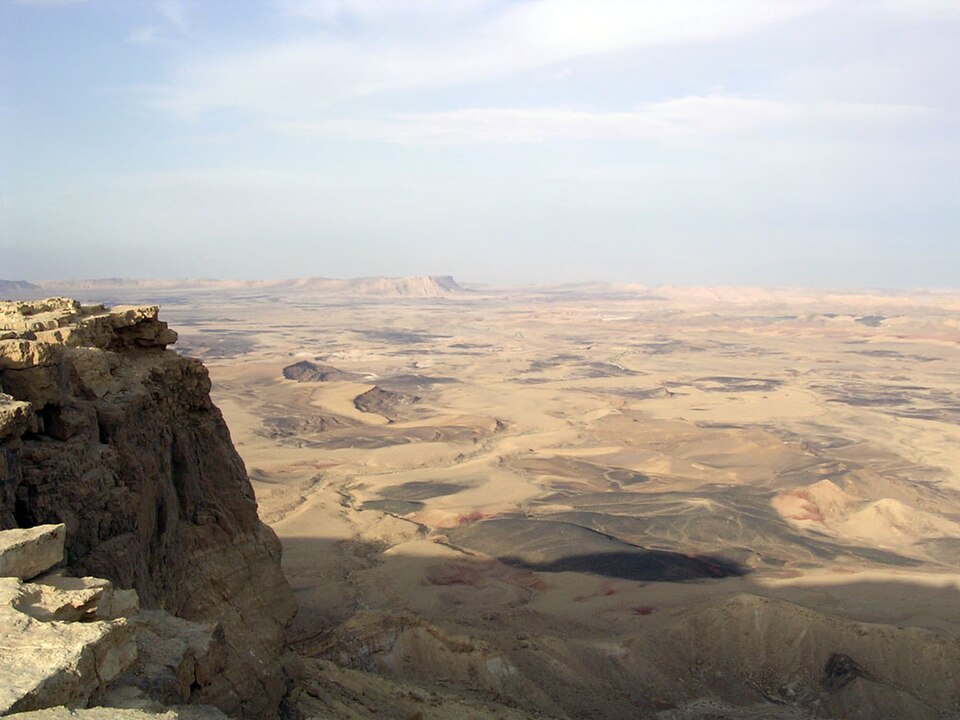
Makhtesh Ramon, the largest erosion crater in the world, Negev Desert

What a Makhtesh Is NOT

Let us clear up the most common misconception first. A makhtesh is not a meteor impact crater. Impact craters are formed in an instant when a space rock slams into the earth at tremendous speed. The force of the collision melts and shatters the surrounding rock, leaving a circular depression with a raised rim of ejected material. You can find impact craters all over the world and on other planets. The most famous is the Chicxulub crater in Mexico, left by the asteroid that wiped out the dinosaurs.

A makhtesh is also not a volcanic crater. Volcanic craters form when magma erupts through the earth’s surface, and the emptied magma chamber collapses inward, creating a depression called a caldera. Again, you can find these all over the world, from Yellowstone to Mount Fuji.

A makhtesh resembles both of these from above, which is why the confusion persists. But the process that creates a makhtesh is entirely different. It involves no sudden catastrophe, no explosion, no eruption. Instead, it takes millions of years of patient, quiet erosion working from the inside out.

How a Makhtesh Forms: Millions of Years in the Making

The story of a makhtesh begins deep underground, with the slow but powerful movement of tectonic plates. Here is how it happens, step by step:

Step 1: The dome rises. Tectonic forces push layers of rock upward, creating an anticline, a dome-shaped fold in the earth’s crust. Imagine pushing up on a stack of blankets from below. The layers arch upward, with the oldest rocks at the center and younger rocks on top.

Step 2: The cap cracks. The top of the dome is made of hard limestone and dolomite, tough rocks that resist erosion. But as the dome stretches upward, the tension creates cracks and fractures in this hard cap. These cracks are tiny at first, barely visible. But they are the beginning of the end.

Step 3: Water finds a way in. Rain falls. Not much of it in the Negev, but enough. Water seeps into the cracks in the hard upper layer and reaches the softer rocks below: sandstone, marl, and clay. These softer rocks are far more vulnerable to erosion.

Step 4: The interior erodes. Once water reaches the soft interior layers, erosion accelerates. The sandstone and marl dissolve and wash away, carried by flash floods through seasonal streams. The process works from the inside out, hollowing the dome like water eating through the soft center of a bread roll while the crust remains intact.

Step 5: The bowl takes shape. Over millions of years, more and more of the soft interior is removed. The hard limestone rim remains standing because it resists erosion far better than the rocks it once covered. A deep, steep-walled bowl forms, surrounded on all sides by cliffs of hard rock.

Step 6: The drainage channel. All the water and eroded material has to go somewhere. A drainage channel, a nahal (dry riverbed), cuts through the rim, creating the outlet through which water exits the makhtesh. Most makhteshim have a single drainage point, unlike impact craters which have no natural outlet. Makhtesh Ramon is an exception, drained by two rivers: Nahal Ramon and Nahal Ardon.

The result is a massive, enclosed depression with steep walls, a relatively flat floor, and a drainage exit. It looks like a crater, but it was built by erosion, not by impact or eruption.
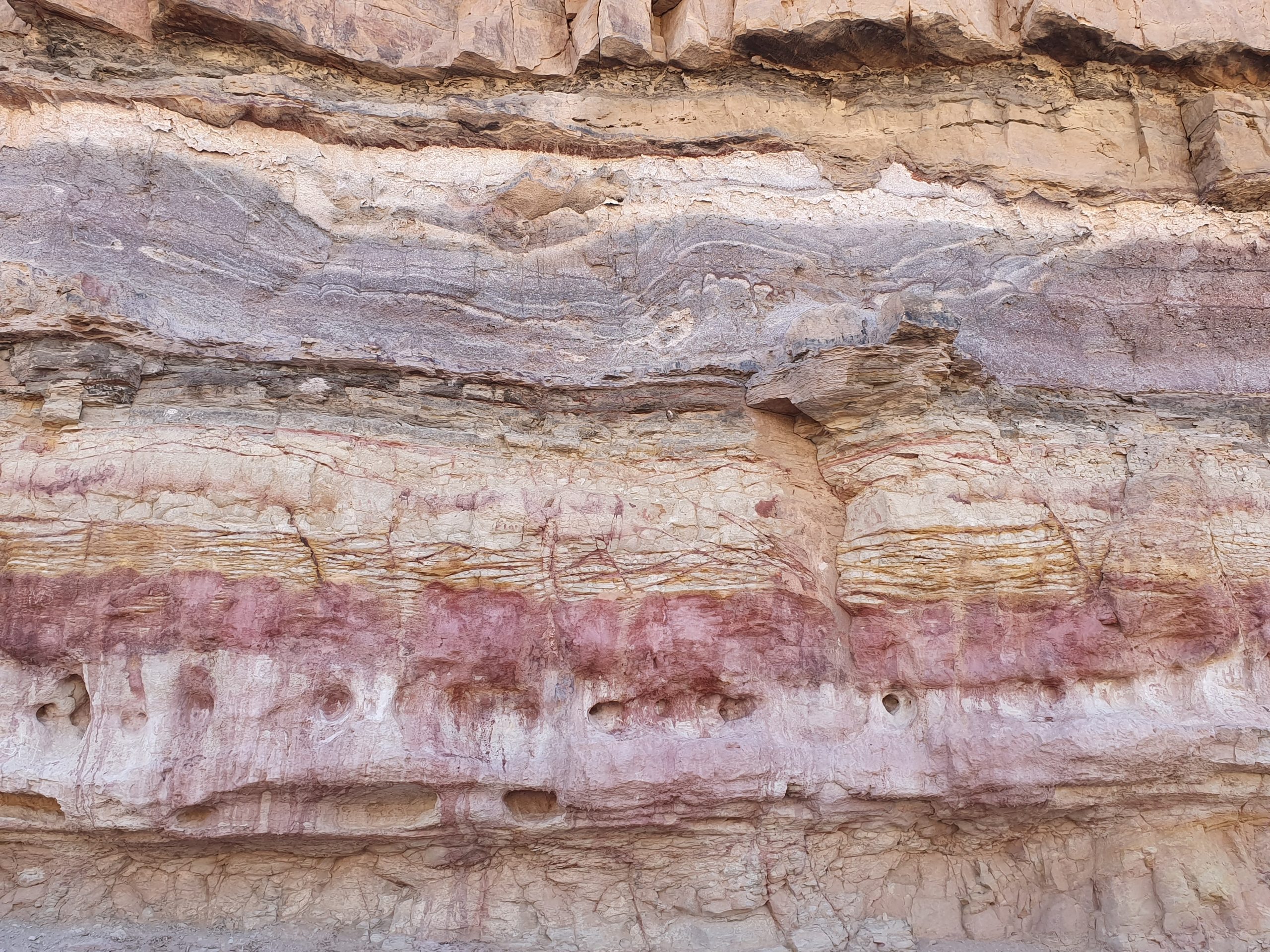
Colorful rock layers inside Makhtesh Ramon

The Seven Makhteshim on Earth

Here is the truly remarkable part: this geological phenomenon exists almost nowhere else on the planet. There are only seven known makhteshim in the world — five in Israel’s Negev Desert and two in the neighboring Sinai Peninsula of Egypt. That is the entire inventory of this landform on Earth.

Makhtesh Ramon is the largest and most dramatic. Located near the town of Mitzpe Ramon, it stretches over 40 kilometers long, 2 to 10 kilometers wide, and plunges more than 500 meters deep. Its elongated, heart-like shape makes it unlike any other crater on earth. Standing on its rim is one of the most breathtaking experiences in Israel. The town of Mitzpe Ramon sits right on the northern edge, and Route 40 descends into the crater and climbs out the other side.

Makhtesh HaGadol (the Large Makhtesh) measures approximately 10 kilometers long and 5 kilometers wide. Despite its name, it is actually the second largest, having been named before Makhtesh Ramon was fully charted. It is less visited than Ramon but arguably more pristine, with fewer roads and developments inside. Also known as Makhtesh Hatira after its drainage river, Nahal Hatira, it sits near the town of Yeruham.

Makhtesh HaKatan (the Small Makhtesh) is the most “classic” in shape, nearly perfectly oval, and offers excellent hiking with stunning geological exposures in its walls.

Two smaller makhteshim on Mount Arif sit south of Makhtesh Ramon. These are less studied and far less accessible, but they share the same geological origin as their larger neighbors. Together with the three major makhteshim, they complete the set of five found in the Negev.

The two additional makhteshim in Egypt’s Sinai Peninsula bring the worldwide total to seven. Geologists have searched for similar structures elsewhere in the world and have not found any. The makhtesh remains, as far as we know, a phenomenon unique to this small region where Israel meets the Sinai.

Why Only Here? A Perfect Geological Recipe

For a makhtesh to form, you need a very specific set of conditions to align. It is like a geological recipe where every ingredient must be present in exactly the right proportion. The Negev and northern Sinai happen to have all of them.

The right rock layers. You need a hard, erosion-resistant cap (limestone or dolomite) sitting on top of much softer layers (sandstone, marl, clay). This specific layering exists in the Negev because of the region’s particular geological history, with ancient seas depositing limestone over older continental sandstone.

The right tectonic activity. The Dead Sea Rift, part of the Great Rift Valley that runs from the Red Sea through the Dead Sea and northward into Lebanon, created the tectonic uplift that pushed these rock layers into dome-shaped anticlines. Without this uplift, the layers would remain flat and no makhtesh could form.

The right climate. This is perhaps the most delicate balance. You need enough rainfall to drive erosion of the soft interior rocks, but not so much that it also destroys the hard rim. The Negev’s arid climate, with its rare but intense flash floods, provides exactly this balance. In a wetter climate, the limestone rim would eventually erode too, and you would just get a valley. In a completely dry climate, there would be no erosion at all.

Enough time. The makhteshim formed over tens of millions of years. The region needed to remain geologically stable enough for this slow process to complete without being disrupted by volcanic activity, major earthquakes, or other catastrophic events.

Other places on earth may have one or two of these ingredients, but nowhere else has all four in the right combination. That is why the makhtesh remains a geological feature unique to this desert.
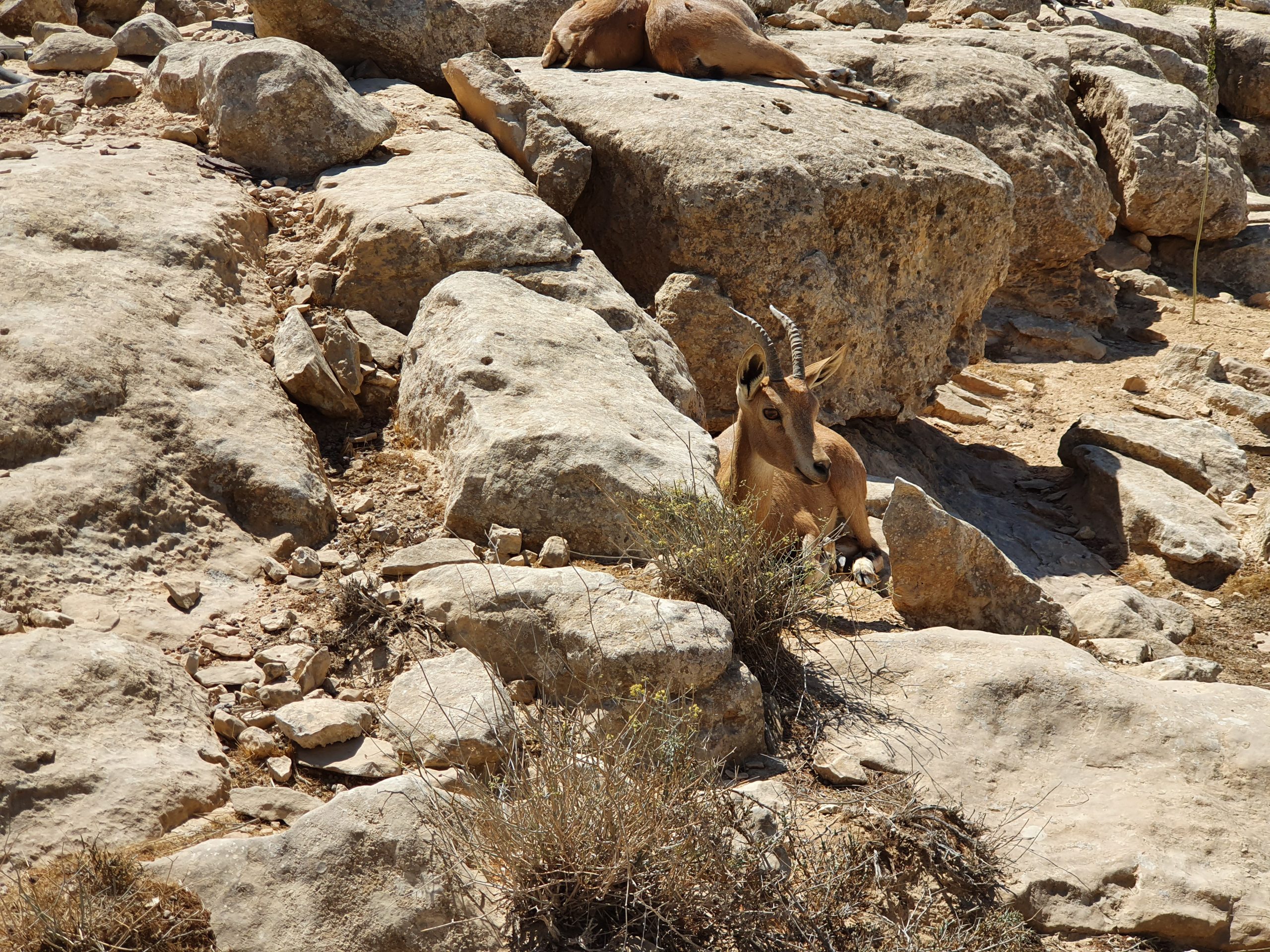
Makhtesh Ramon crater landscape, Negev

A Rainbow of Ancient Rock: The Colors Inside the Makhtesh

One of the most visually striking aspects of any makhtesh is the color. The walls and floor are painted in bands of red, yellow, purple, white, black, and every shade in between. This is not just beautiful; it is a visible record of hundreds of millions of years of geological history.

Each color represents a different mineral composition and a different chapter in the earth’s story:

  • Red and orange layers get their color from iron oxide (rust). These formed in periods when iron-rich sediments were exposed to oxygen.
  • Yellow and tan layers are typically sandstone with different mineral content, often deposited in desert or coastal environments.
  • Purple and dark red bands indicate manganese-rich deposits, formed under specific chemical conditions in ancient seas.
  • White layers are often chalk or gypsum, deposited when shallow seas evaporated.
  • Black bands can indicate volcanic basalt intrusions or organic-rich sediments from ancient swamps.

In Makhtesh Ramon, the colored sands are one of the most popular stops. Visitors can see brilliant bands of color in the exposed cliff faces, each one representing conditions that existed millions of years before the first humans walked the earth. It is like reading a book written in stone, with each chapter a different color.

The geological layers visible inside the makhteshim span from the Triassic period (about 250 million years ago) through the Cretaceous (about 66 million years ago). That means you can see rocks from before the age of dinosaurs all the way through to their extinction, all exposed in one sweeping panorama.

Fossils: When the Desert Was a Sea

Perhaps the most surprising thing about finding yourself in the bone-dry Negev Desert is realizing that you are standing where fish once swam. The rocks inside the makhteshim are full of marine fossils, proof that this region spent millions of years under a shallow tropical sea.

This was the Tethys Sea, an ancient body of water that once separated the supercontinents of Laurasia (to the north) and Gondwana (to the south). During the Mesozoic Era, the Tethys covered much of what is now the Middle East, depositing the limestone and chalk layers that would eventually become the hard cap of the makhteshim.

The most iconic fossils found inside the makhteshim are ammonites, spiral-shelled marine creatures related to the modern nautilus. Some ammonite fossils in Makhtesh Ramon are remarkably large and well-preserved, sitting right on the surface where hikers can spot them along the trail. It is a surreal experience: finding a perfect spiral shell fossil in the middle of one of the driest landscapes on earth.

You can also find fossils of ancient sea urchins, corals, and various shellfish. Together, these fossils tell the story of the Tethys Sea’s gradual retreat as tectonic forces pushed the region above sea level. The transition from marine to terrestrial environments is literally written in the rock layers of the makhtesh walls.

The Word “Makhtesh”: When Hebrew Becomes the Scientific Term

The word “makhtesh” (in Hebrew, mortar) refers to the bowl-shaped vessel used with a pestle for grinding spices. It is a perfect description of the shape: a deep, steep-walled bowl.

What makes this linguistically interesting is that there is no equivalent word in English, or in any other language. The reason is simple: the phenomenon does not exist anywhere else, so no other language ever needed a word for it.

English-speaking geologists have occasionally used the term “erosion cirque,” but this is inaccurate. A cirque is a feature carved by glaciers, and the makhtesh formation process has nothing to do with ice. Most international geologists have simply adopted the Hebrew word “makhtesh” as the official scientific term, one of those rare cases where a language contributes a word to global science because the phenomenon it describes exists only where that language is spoken.

Visit the Makhteshim with Hoshen Tours

The makhteshim of the Negev are among the most unique geological sites on the planet, and experiencing them with a knowledgeable guide transforms a scenic overlook into a journey through deep time. At Hoshen Tours, we build Negev itineraries that bring the geology, history, and desert landscapes to life.

Whether you want to stand on the rim of Makhtesh Ramon at sunrise, hike into the colored sands, search for ammonite fossils on the crater floor, or explore the quieter trails of Makhtesh HaGadol and HaKatan, we will design a day that matches your interests and fitness level.

The Negev is not just empty desert. It is one of the most geologically fascinating places on Earth, and the makhtesh is the proof. Contact us to start planning your Negev adventure.